






Sourcing and Procurement
Digital Transformation in Procurement
How Sourcing Transformation Leverages Digital Transformation Strategies?
Techopedia explains Digital Transformation as a term most often associated in the business world where companies are striving to keep up with changing business environments brought about by customer demand and technology.
Digital tools and technologies are changing how procurement professionals interact and in turn these changes how people do business.
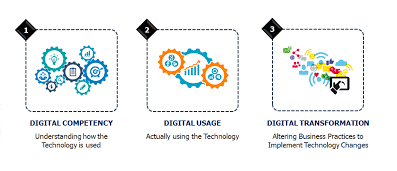
A simple way to explain this is in earlier times when we wanted to sell something, you would either get the product to work, go to a friend’s house or invite the prospective buyer to see the product in person.
Most of the times this is such a burden. Nowadays, this is done digitally and works easier for both the seller and buyer. Photographs, videos, etc. are shared and posted in social networks, chats, messengers etc, enhancing the procurement function.
In a similar manner, this type digital procurement of transformation shows how companies revolutionalise their business processes using digital technology to increase competition and be at an advantage in the market.
To explain this further, the rapid advancement of technology has triggered the change and the progress that we are expected to see in Procurement will play a crucial role in seeing how our industry accepts and moves ahead. Taking on tools that accompany its growth will be imperative to its success, for eg, Advanced analytics, cloud applications and tools, RPA (Robotic Process Automation) etc. Many companies are still taking time to accept these due to many reasons, but the sooner they do they will realize what it can do to help them go the way forward.
Therefore, companies must keep themselves abreast of all new technologies and its usage to help them thrive.
Procurement and Digital Transformation
When we talk about Procurement, we need to know the role it has in the digital transformation growth.
Procurement 4.0 refers to the trends in automation and exchange of data in manufacturing technologies, which includes IoT (Internet of Things or Big Data), cloud and cognitive computing, drones, AI (artificial intelligence), which represent a mix of technologies. At the same time, companies must consider digital revolution and also ensure that there is no hindrance in the way they work. AI and automation play an important role as a substitute to humans for mundane and tedious tasks in the procurement process. It is important to gauge the impact of automation and digital transformation on the business and the co-related environment.
Intelligent implementation of a digital procurement strategy will help procurement specialists thrive.
Also, this will add superior growth spurt in business processes, transparency and security. This will also help with the growth in analytics and partnership by means of Sourcing, contract management, supplier management, order delivery and payment controls.
The sooner we learn to adopt and adapt to these new technologies in the procurement process, the quicker one has the chance to obtain a place in the procurement world.
Building a Digital-First Culture: Navigating Change Management and the Talent Gap
The primary bottleneck in procurement transformation is rarely the technology; it is the organizational culture. According to industry benchmarks, over 70% of digital initiatives fail to reach full maturity due to internal resistance and a lack of digital-native skills.
A successful transformation requires a shift from transactional "buying" to strategic "value orchestration." This involves:
- Upskilling the Workforce: Transitioning teams from manual data entry to interpreting AI-driven predictive analytics.
- Stakeholder Alignment: Ensuring that the CFO and COO are aligned on the digital roadmap to prevent the creation of new departmental silos.
- Adoption Over Implementation: Success is measured by how effectively the team uses the new S2P (Source-to-Pay) platforms, not just by the "go-live" date.
Beyond Cost Savings: Driving ESG Resilience and Risk Mitigation through Digital Data
In the modern enterprise, digital transformation is the only viable path to meeting Environmental, Social, and Governance (ESG) mandates. Manual systems cannot track Scope 3 emissions or verify tier-2 supplier diversity at scale.
By integrating a digital-first strategy, procurement leaders gain two critical advantages:
- Real-Time Risk Intelligence: Digital twins and AI-powered monitoring allow teams to predict geopolitical or environmental disruptions before they impact the bottom line, shifting the supply chain from reactive to resilient.
- Sustainability Transparency: Automated data collection provides the "single source of truth" required for CSRD and other global regulatory reporting, turning compliance into a competitive advantage.
Digital transformation is no longer just a tool for efficiency—it is the foundation for a sustainable and audit-ready enterprise.
Frequently Asked Questions:
How does digital procurement transformation differ from simple digitalization of processes?
Digitalization is the act of converting manual data into digital formats (e.g., scanning an invoice). Digital transformation is the holistic re-engineering of the procurement operating model using technology to change how value is created. It moves the function from a reactive, transactional department to a proactive, data-driven strategic partner that influences 100% of enterprise spend.
What is the primary cause of failure in enterprise procurement digital transformation projects?
The most common failure point is a "technology-first" approach that ignores change management. Without addressing the talent gap and organizational culture, high-cost S2P platforms often become "shelfware" with low user adoption. Success requires a "people-process-platform" alignment where stakeholders are incentivized to move away from legacy manual workflows.
How can digital transformation help procurement teams meet ESG and sustainability mandates?
Digital platforms provide the end-to-end transparency needed to track supplier diversity and carbon footprints across the entire supply chain. By integrating ESG scorecards into the automated sourcing and onboarding process, enterprises can ensure that every dollar spent aligns with corporate sustainability goals and regulatory requirements like the CSRD.
What is the expected ROI and timeframe for a digital procurement transformation?
While specific results vary, enterprises typically observe a 15–25% increase in procurement productivity and a 5–10% reduction in total spend within 12–18 months. The "soft" ROI includes significantly reduced cycle times for contract approvals and a 40% improvement in supplier risk detection, which prevents costly supply chain disruptions.
Is Generative AI ready to handle autonomous negotiations and contract management?
While GenAI is not yet ready for fully autonomous high-stakes negotiations, it is currently "co-pilot ready." It excels at summarizing thousands of contract pages, identifying non-compliant clauses, and drafting initial RFPs. Implementing a Human-in-the-Loop (HITL) framework ensures that AI handles the data-heavy "grunt work" while human category managers make the final strategic decisions.
