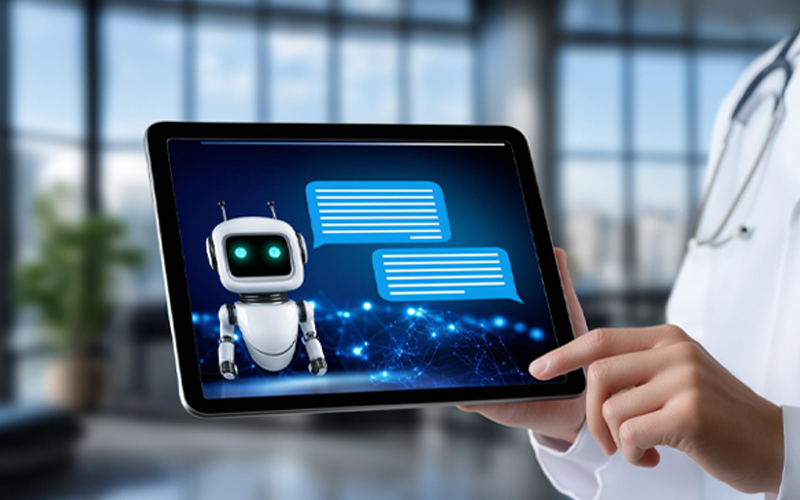



We are living in an age in of rapid digital transformation, where almost every field is being reshaped by the advent of artificial intelligence (AI). The field of medicine is one such area where AI is, and no exception — in fact, the potential for artificial intelligence in healthcare is vast and continually expanding. One of the primary reasons that causes thousands of deaths around the world is due to errors or mishaps that occur in the area of patient safety. Studies have shown that such errors can be reduced, and patient care can be enhanced with the use of AI in medical applications and patient care monitoring. As AI-driven systems become integral to healthcare, they are paving the way for safer, faster, and more personalized care delivery. Let us have a look at some of the ways in which AI can truly make a difference.
what is the potential for artificial intelligence in healthcare?
AI in healthcare goes beyond automation — it’s about enabling intelligent, data-driven care that enhances human expertise rather than replacing it. From predictive analytics to individualized treatment plans, AI’s potential lies in improving patient outcomes, safety, and operational efficiency.
-
Improved patient monitoring
-
Leveraging predictive analytics
-
AI’s role in personalization and treatment optimization
-
Broader opportunities: efficiency, diagnosis, and administrative optimization
Gone are the days when patients made lists to track their medications. We are in the age of AI-driven wearable devices and remote monitoring systems that are transforming patient care by providing real-time data on vital signs and health metrics.
So, how do these AI-powered wearable devices make a difference in the life of patients? These devices are able to detect issues in many medical fields such as, radiology, gastroenterology, neurology or cardiovascular. These wearable devices monitor blood pressure, heart rate and glucose levels, providing continuous feedback to both patients and doctors. They have the ability to detect any kind of abnormalities and alert healthcare providers to possible adverse medical issues before they become critical.
Remote monitoring through AI is indeed a boon for healthcare providers and it enables timely interventions and adjustments to treatment plans, thus reducing the need for hospital readmissions and improving overall health outcomes.
Doctors always point out that for any kind of medical issue, early diagnosis and treatment is crucial. This is where AI-powered tools are making a mark through predictive analytics.
How is this done? Machine learning (ML) helps with inspecting and analysing large amounts of data from medical imaging, electronic health records (EHRs) and genetic information to identify patterns. The patterns seen can predict the likelihood of the patient developing diseases such as diabetes, heart disease and even cancer. A case in point are AI algorithms that have been useful in the early detection of various types of cancer, such as breast and lung cancers. When analysing medical images, AI can accurately identify potential cancerous lesions that are not easy for the human eye to catch.
With the advances in medical technology, the potential for artificial intelligence in healthcare is now able to tailor personalised treatment plans for individual patients. This is achieved through sophisticated of algorithms that can analyse and process extensive patient data, medical history, genetic information and lifestyle factors.
Traditional medicine generally follows the trial-and-error process. This can be done away with through the AI-driven personalised treatment plans that enable a more patient-centred approach to healthcare. Further, they are known to improve patient outcomes and reduce the risk of adverse drug reactions.
Administrative tasks are rarely enjoyable for healthcare providers, yet they are essential to maintaining smooth operations. The potential for artificial intelligence in healthcare helps in streamlining such tasks, allowing doctors and staff to focus more on what they do best - patient care.
What are the administrative tasks that AI could help with?
The burden on clinicians to handle administrative tasks is high since, apart from their regular work, they also need to ensure accurate and up-to-date patient records. In this case, there are natural language processing (NLP) algorithms that come to the rescue by automatically transcribing clinical notes, extracting relevant information and populating electronic health records (EHRs) automatically.
Additionally, AI can transform resource allocation and scheduling two of the most challenging and time-consuming tasks for healthcare providers. AI can help with both and improve patient flow and reduce wait times. By examining historical data and patient demand patterns, AI can predict staffing needs and ensure that healthcare facilities are equipped to deal with the volume of patients coming in.
These intelligent automation capabilities demonstrate how AI is revolutionizing not only diagnosis and treatment but also the administrative backbone of healthcare systems worldwide.
AI in health and patient monitoring
Gone are the days when patients made lists to track their medications. We are in the age of AI-driven wearable devices and remote health monitoring systems that are transforming patient care by providing real-time data on vital signs and health metrics.
So, how do these AI-powered wearable devices make a difference in the life of patients? By unlocking the potential for artificial intelligence in healthcare, these smart These devices are able to detect issues in many medical fields such as, radiology, gastroenterology, neurology or cardiovascular. These wearable devices monitor blood pressure, heart rate and glucose levels, providing continuous feedback to both patients and doctors. These AI-enabled monitoring systems are designed to detect any kind of abnormalities and alert healthcare providers to possible adverse medical issues before they become critical.
-
predictive analytics and preventive care
-
reducing medical errors and improving outcomes
Doctors always point out that for any kind of medical issue, early diagnosis and treatment is crucial. This is where AI-powered predictive analytics are making a mark through predictive analytics.
How is this done? Machine learning (ML) algorithms analyze vast amounts of data from medical imaging, electronic health records (EHRs) and genetic information to identify patterns. These insights, combined with AI patient monitoring systems can predict the likelihood of the patient developing diseases such as diabetes, heart disease and even cancer.
A case in point are AI-driven algorithms that have been useful in the early detection of various types of cancer, such as breast and lung cancers. When analysing medical images, AI can accurately identify potential cancerous lesions that are not easy for the human eye to catch.
According to the World Health Organization (WHO), globally millions of patients suffer each year due to unsafe health care resulting in over 2.6 million deaths in just low-and middle-income countries alone.
Prescribing wrong medication, administering medication in an incorrect manner, surgical errors and failure to document patient allergies or potential drug interactions are but some of the common medical errors that can be fatal. The good news is that AI can significantly help minimize such medical errors through intelligent automation and continuous monitoring.
For example, AI patient monitoring systems have the mechanism to check patient data under clinical guidelines to suggest diagnoses and treatment options, thereby minimising the risk of human error.
Moreover, AI can improve medication safety by identifying potential drug interactions and ensuring correct dosages. Automated validation can flag discrepancies in medication orders, reducing the likelihood of prescription errors.
It is clear that AI systems can detect patterns, anomalies and risk factors that are invisible to the human eye. By utilising the power of AI and embracing it, healthcare providers can provide enhanced patient care and advanced safety options that will ultimately save lives and improve the quality of life.
overcoming challenges and ensuring safe adoption of ai
While the potential for artificial intelligence in healthcare is vast, adoption requires responsibility and regulation.
data privacy and compliance
AI relies heavily on patient data. To maintain trust, healthcare organizations must ensure AI systems comply with privacy standards like HIPAA and GDPR.
ethical and governance considerations
Transparency and explainability are critical — clinicians must understand how algorithms arrive at conclusions to ensure responsible use.
workforce readiness and change management
For AI to succeed, hospitals must invest in training healthcare professionals to work alongside AI systems, interpreting insights effectively and ethically.
why Infosys BPM is your partner in ai-enabled healthcare transformation
Infosys BPM’sHealthcare BPO Services domain expertise, flexible operating model and integrated IT-BPM solutions address the changing dynamics of the healthcare industry. Our integrated IT-BPM solutions for healthcare are designed to transform healthcare operations, enhance patient experience and improve patient satisfaction.
our capabilities
- AI health monitoring systems that integrate predictive analytics and real-time alerts.
- Data-driven workflows for AI patient monitoring, claims management, and digital operations.
- Advanced automation frameworks that reduce manual intervention and enhance process accuracy.
proven impact
Infosys BPM has partnered with global healthcare providers to design AI-based monitoring and risk-prediction systems, reducing response time and improving patient safety scores.
FAQs on AI in healthcare
AI health monitoring uses machine learning and sensor data to continuously assess a patient’s condition, alerting healthcare teams when intervention is required.
By analyzing real-time data, AI patient monitoring detects anomalies faster than traditional systems, reducing medical errors and improving outcomes.
The potential lies in AI’s ability to combine data, algorithms, and human expertise to create safer, faster, and more personalized care ecosystems.