



Modern connectivity is on a roll. Worldwide, massive Internet of Things (IoT) deployments and 5G rollouts have led to an explosion of activity among telecommunication (telecom) enterprises. As these companies race to build networks that cater to the demands of growing global economies, the ability to anticipate future events and handle them efficiently is critical for success.
That is where the mountains of data that telecom operators gather come into play. Every call drop, every billing dispute, every network hiccup generates information. The question is: can operators mine the patterns from this data to prevent tomorrow's problems? Enter predictive analytics — the use of statistical algorithms, Machine Learning (ML), and historical data to forecast future events that may affect enterprises. The paradigm supports telecom companies in important areas such as forecasting customer churn, optimizing network performance, and detecting fraud proactively. The insights and resultant actions give telecom operators the benefits of reduced operational costs and enhanced service reliability.
As per recent industry insights, deploying predictive analytics leads to improved customer retention, via the offering of personalized incentives. It boosts revenue via targeted marketing and demand forecasting. Additional gains include efficient resource allocation, predictive maintenance to minimize downtime, and strengthened security measures, positioning telecom firms for competitive advantage amid 5G and IoT growth.
combating customer churn
One of the primary uses of predictive analytics is in reducing customer churn. Operators typically do this by identifying at-risk users and designing tailored retention strategies. They analyze vast datasets — including data such as usage patterns, billing history, service interactions, network performance, and behavioral signals — to build advanced ML models using algorithms such as Support Vector Machine (SVM), random forest, or logistic regression for classification and regression. These models then assign “churn propensity scores” to customers, helping operators identify at-risk subscribers early.
Operators can then deploy targeted tactics like personalized discounts, service upgrades, or proactive support to retain these subscribers. Instead of waiting for customers to complain, operators now spot problems before the customer does. As per McKinsey, companies implementing comprehensive analytics-driven strategies, including predictive models for micro-segmentation and targeted interventions, have seen lower churn rates by 10-15% over 18 months. Simultaneously, metrics like Customer Lifetime Value (CLTV) and Net Promoter Score (NPS), are boosted.
For example, Reliance Jio in India used predictive models on data such as network sensors, customer feedback, and social media, as well as competitor data to pinpoint churn risks. They used the insights to optimize capacity in high-churn areas and launched affordable plans tailored for customer needs. The end result was enhanced retention and market dominance.
anticipating network failures
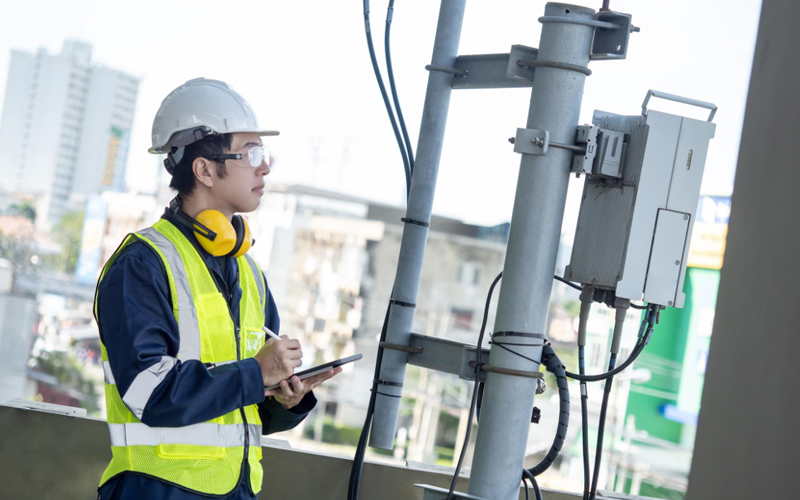
Predictive analytics anticipates network failures by analyzing historical data, real-time metrics, and patterns such as signal degradation or equipment stress. The analytics help operators forecast disruptions before they occur. They also deploy ML models on IoT sensor data from towers and devices, enabling 24/7 monitoring that predicts outages with high accuracy, often days in advance. Such strategies help operators reduce unplanned downtime by up to 30-50%, as per industry deployments integrating 5G and edge computing trends.
By employing proactive fiber optic monitoring, AT&T used ML on fiber sensor data to forecast cable cuts and degradation, and achieved 40% fewer incidents and faster recovery times through preemptive repairs.
optimizing network performance, fighting fraud
Network optimization with predictive analytics involves anticipating traffic peaks and congestion to enable real-time adjustments. For fraud detection, the models flag anomalous patterns so that human operators can take action and prevent losses.
Other uses of predictive analytics include personalized marketing, service quality prediction, revenue forecasting, and IoT-driven decision-making. All these functions enhance faster response times in telecom operations, and help telecom companies gain a competitive edge.
The overall advantages due to these technology transitions are immense: telecom trends reports from Gartner highlight the benefit of deploying AI-driven predictive tools like agentic AI for workflow automation and resource optimization, thereby propelling global services spending growth to $1.76 trillion by 2028. IDC forecasts estimate telecom services growing to $1,532 billion in 2025, emphasizing AI for customer experience and efficiency amid 5G and edge computing shifts.
Fewer call drops during the morning commute. Lesser incidences of cell towers going dark. Millions in savings for the operator. Technologies such as predictive analytics usher in a win-win for everyone.
how Infosys BPM can help
The Infosys Communications, Media and Entertainment practice at Infosys BPM offers Insights-as-a-Service that leverages open source technologies and components for value-added insights. Infosys BPM’s analytical algorithms, data-driven operations support and proven analytical use cases have been deployed across the world to enable carriers to monetize network assets while managing spikes in demand for bandwidth.
Frequently Asked Question
Traditional network monitoring reacts to outages after system thresholds are crossed, whereas predictive analytics uses historical machine learning models to forecast hardware failures and traffic congestion before they occur. This structural shift allows Communication Service Providers (CSPs) to schedule preventive maintenance windows, reducing unplanned network downtime by up to 30%.
Telecom operators deploy strict data masking protocols and air-gapped infrastructure to ensure telemetry ingestion complies with GDPR and regional privacy laws. By isolating network performance metadata from Personally Identifiable Information (PII), analytics systems predict capacity loads without risking regulatory exposure.
Predictive algorithms analyze densification trends and device mobility patterns to optimize where 5G cells are deployed. This targeted roll-out prevents the over-provisioning of expensive network hardware while ensuring that service levels meet regional throughput demands.
Telecom organizations typically observe a 15% to 20% reduction in customer churn within the first six months of deploying predictive analytics dashboards. Identifying micro-anomalies in Quality of Experience (QoE) allows retention teams to intervene proactively before a subscriber defects to a competitor. View our telecom analytics case studies to benchmark your operational transformation.