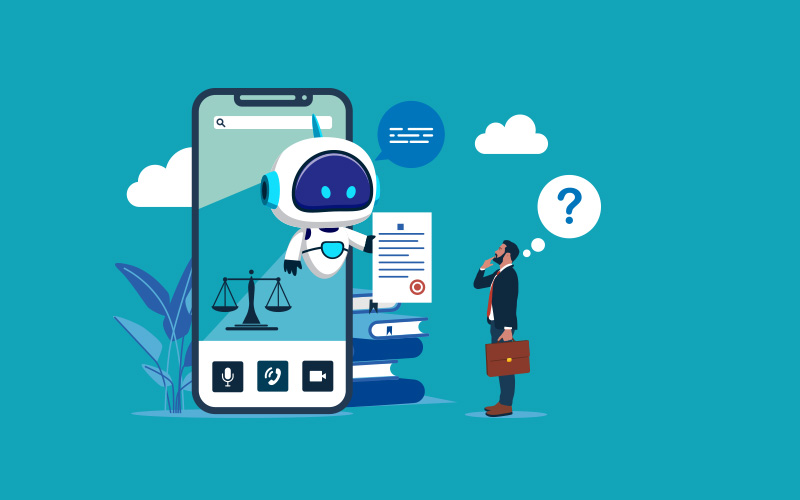



Enterprise legal teams face growing workloads on constrained budgets. As contract volumes increase, regulatory requirements expand, and litigation complexity deepens, hiring and upskilling can hardly keep pace. Legal AI agents are autonomous systems that handle structured legal workflows end-to-end, reasoning across large document sets, executing multi-step tasks within defined parameters, and escalating judgment calls to human lawyers. The legal AI software market reflects the scale of this shift, projected to reach $10.82 billion by 2030.
What makes legal AI agents different from traditional legal tech?
Legal technology used to automate isolated tasks, like searching a database, populating a template, or flagging a keyword. Autonomous agents go further. They plan multi-step workflows, adapt to what they find along the way, execute across connected systems, self-correct when outputs fall short, and return with completed work rather than partial results.
The agent, in essence, pursues the given objective. In the case of document reviews, that means the agent reads the documents, categorises them by relevance, and cross-references information across files. Then it flags risks and produces a summary, without being prompted at each step.
Infosys BPM legal process outsourcing services help organisations integrate intelligent automation into legal operations, maintaining rigorous governance, process consistency, and experienced oversight across contract review, compliance support, research, and document management.
Top use cases in enterprise legal operations
Legal AI agents can be deployed across the full spectrum of enterprise legal work, from transactional review through litigation to regulatory compliance.
Contract review and due diligence
Contract review is the first and highest-value use case for most enterprise legal teams. Agents scan agreements for missing or non-standard clauses, flag deviations from standard positions, identify problematic liability or indemnification terms, and produce a prioritised issue summary. The automated review saves the attorney two to three hours, even with a detailed output ready for sign-off.
In M&A due diligence, the scale of impact is larger still. Agents process entire data rooms — categorising documents, cross-referencing information across thousands of files, identifying change-of-control triggers, and generating risk summaries. Preliminary review can be completed within days.
Legal research and memo drafting
Research is among the most time-intensive non-billable activities in legal practice. An agent running a research workflow searches across case law databases and statutes simultaneously, synthesises findings, identifies supporting and distinguishing precedents, and produces a draft memorandum with citations. Research that typically takes four to six hours reaches the most relevant sources in thirty to forty-five minutes with AI agents. The agent also identifies recent rulings or related questions the lawyer had not yet thought to ask.
e-Discovery and document triage
E-discovery is one of the highest-cost activities in commercial litigation. Agents apply relevance filters, tag documents by topic and party, identify privileged communications, and reduce large production sets to reviewable volumes. Enterprise legal teams running agent-assisted e-discovery report document review volume reductions of up to 60%, with cost and time savings in the range of 60–80%.
Compliance monitoring
Agents track regulatory changes relevant to specific jurisdictions and practice areas, monitor filing deadlines, and generate compliance reports and alerts automatically. The several hours of manual review can be transformed into a set of notifications.
Document drafting and redlining
Agents generate working drafts of standard legal documents, such as NDAs, demand letters, vendor agreements, and motions, from templates enriched with case-specific facts and firm style guidelines. For redlining, agents compare incoming documents against standard positions, rewrite flagged clauses, and return a version ready for attorney review. These autonomous agents integrate directly with native word-processing software like Microsoft Word via APIs.
The in-house dimension: agents as governance infrastructure
Autonomous agents also provide significant benefits for in-house legal departments, where the challenge is different in character. As agents proliferate across business functions, in-house legal teams become responsible not only for their own automation but for governing how agents are deployed by finance, HR, procurement, and product ensuring that contracting, privacy, IP, and regulatory policies are respected when AI systems act autonomously on behalf of the organisation.
In-house counsel must define where agents can operate with confidence, where human review must precede action, and how accountability is assigned when autonomous systems contribute to decisions with legal consequences.
Implementation and human oversight

Eighty-six per cent of lawyers cite disjointed systems as a major barrier to effective client service. Fragmented data creates the same barrier to reliable agent performance. Agents that cannot access the right information at the right moment cannot reason through a workflow dependably.
Conclusion
Successful deployment of agentic AI tools requires clean data connected across document management, case management, and research platforms, with approval workflows defined for each task type. Every agent action should generate a log of what data was used, what reasoning was applied, and what decision was reached. The log would support internal review and external audit. Organisations with structured adoption programmes report 72% higher deployment success than those without.
Enterprise legal operations require more than automation tools. They require process discipline, data governance, integrated workflows, and the operational depth to maintain quality across high-volume legal work at scale.
Frequently asked questions
Legal AI agents can manage contract review and due diligence, legal research and memo drafting, e-discovery and document triage, compliance monitoring, and template-based document drafting and redlining. They execute multi-step workflows, cross-reference large document sets, and deliver prioritized outputs for attorney review.
Agents scan agreements at scale, flag non‑standard clauses, identify risk exposures (indemnities, liabilities, change‑of‑control triggers), and produce prioritized issue summaries. This reduces manual review time (often saving several hours per contract) and raises consistency by applying firm-standard rules and learned precedents.
Organisations need data governance (clean, connected document and case systems), defined approval workflows, access controls, and detailed action logs that record data sources, reasoning steps, and final outputs. These logs support internal review, external audit, and accountability when agents make or support decisions.
In e-discovery, agents apply relevance filters, privilege detection, and topic tagging to cut review volumes substantially—enterprises report reductions up to ~60%—leading to significant time and cost savings (typically 60–80% in document review spend) and faster production timelines.
Risks include fragmented data access, model hallucinations or inaccuracies, privacy/regulatory noncompliance, and misassigned authority for automated actions. Mitigations: start with controlled pilots, enforce strong data integration and governance, require human-in-the-loop review for high‑risk outputs, monitor model performance continuously, and maintain escalation rules and audit trails.