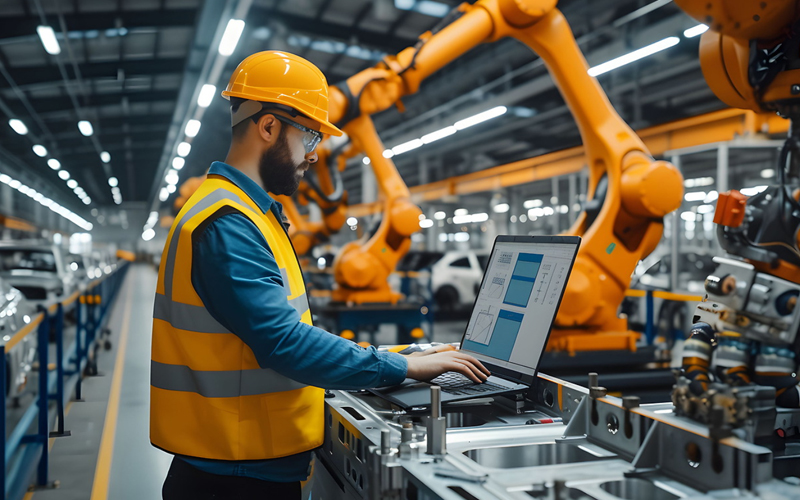



Conveyor belts humming. Machines going through well-oiled rhythms in predefined cycle times. Operators overseeing production, and quality control personnel scanning the finished product. The controlled chaos of the factory floor is a familiar artifact from the dawn of the industrial era. The paradigm has worked over the decades but is now well past its sell-by date. The reason: a more demanding global marketplace where a single defective batch of product could cascade into brand catastrophe, from supply chain issues and customer complaints to reputational damage that may take years to undo.
Today, manufacturers are discovering that the most powerful quality control tool is actually hidden in the data streaming continuously from sensors embedded throughout the shop floor — operations data that tells them what is happening in the assembly line even before the defect occurs.
the sensors on the shop floor
Internet of Things (IoT) platforms are now mature enough to deliver measurable impact when deployed in manufacturing operations. This quiet shift is an evolution from the previous reactive quality management where defects were caught after they happened, to proactive quality control where conditions that cause defects are identified and corrected in real time. Telemetry from IoT sensors that monitor temperature, pressure, humidity, vibration, and other parameters create a continuous stream of operational intelligence that can be parsed and understood. When that stream is analyzed effectively, it becomes possible to see potential issues forming before they become quality problems.
What makes this particularly powerful is the convergence of IoT with Artificial Intelligence (AI) and Machine Learning (ML). As research on predictive technologies notes, the real value emerges when advanced analytics sift through vast quantities of information speedily to find the signal amid all the noise, identifying patterns that human inspectors may not catch.
turning quality assurance into quality prediction
“The most dangerous kind of waste is the waste we do not recognize.” - Shigeo Shingo, Japanese engineer and the world’s leading expert on manufacturing practices and the Toyota Production System.
At their core, IoT-enabled quality control systems track every variable that influences product quality. They work in tandem with analytical tools that continuously monitor them against known thresholds to derive the needed insights. Manufacturers are increasingly seeking common, scalable platforms that can deploy across multiple sites and provide such a unified view of production data. This unified visibility is what makes proactive intervention possible.
Now, a pharmaceutical manufacturer running continuous temperature monitoring across filling lines can detect excursions the moment they begin. A precision machining operation tracking tool wear in real time could schedule replacements before dimensional accuracy degrades. Or, a food processing facility that monitors conveyor speeds and packaging weights can catch calibration drift before it affects compliance.
When quality issues are prevented rather than corrected, waste drops. Rework and scrap become exceptional events. Most importantly, the organisation develops institutional knowledge about what actually drives quality outcomes — knowledge that improves decision making across engineering, procurement, and operations.
what makes it work
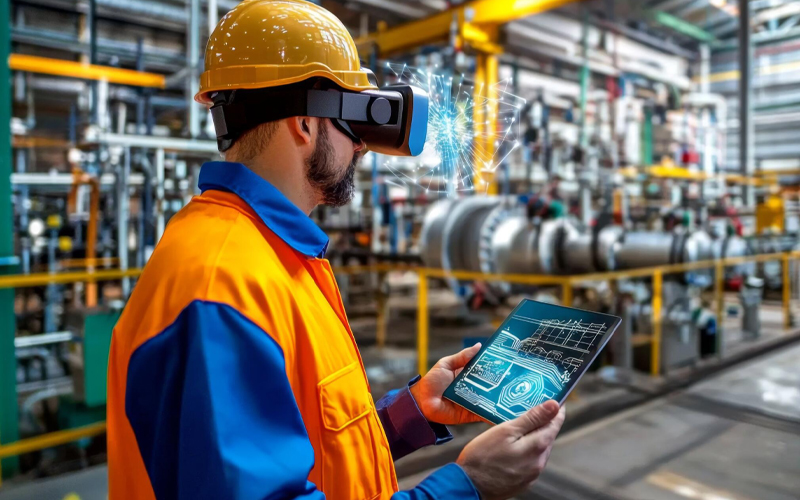
Implementing IoT-enabled quality control is not just a matter of installing sensors and waiting for insights to appear. The technology requires planning, infrastructure investments, integration with existing systems, as well as ongoing support to deliver value. It is where the Operational Technology (OT) function combines with Information Technology (IT) and becomes central to manufacturing success.
Modern manufacturing environments demand Service Desk as a Service (SDaaS) models that can handle the complexity of converged IT and OT environments. When a sensor network goes offline or analytics platforms fail to process incoming data, the impact ripples directly into production quality. Support teams need manufacturing-specific expertise combined with rapid response capabilities. Industry research consistently shows that organisations struggling with IoT implementation often underestimate the importance of this operational support layer.
The integration challenge extends to connecting IoT data with enterprise systems like Manufacturing Execution Systems (MES), Enterprise Resource Planning (ERP) platforms, and quality management software. IoT research initiatives emphasise that while organisations are confident in the business benefits of IoT, concerns about maintenance, security, and system integration remain top of mind. Orchestrating the workflow between sensors, analytics, and business processes requires careful planning and sustained investment.
getting to the factory of the future
“Industry 4.0 is not really a revolution. It’s more an evolution. Today, I think Industry 4.0 helps to drive the competitiveness of industry. We are still in development every day.” - Christian Kubis, head of plant engineering at the Festo Scharnhausen Technology Plant on building the factory of the future.
For manufacturers considering the transition, the path forward begins with identifying the quality variables that matter most. Not every process needs dense sensor coverage. Start with the critical parameters that drive the most significant quality outcomes and build from there. Pilot programs in contained environments allow organisations to learn how IoT data flows through their systems before scaling across operations.
Successful implementations involve treating IoT as a tool that makes quality professionals more effective, freeing them from mundane and tedious monitoring to focus on root cause analysis and process improvement. The goal is not to replace human judgment but to amplify it with better information.
Finally, proactive quality control is a journey rather than a destination. The manufacturers seeing the greatest returns are those treating their IoT implementations as living systems, continuously refining sensor placement, adjusting analytical models, and incorporating new data sources as they become available. The technology improves with use as the insights deepen over time.
The factory floor of the future is defined by the ability to understand, in real time, the conditions that create quality, and to act on that understanding before problems emerge. Manufacturers who master this will build organisations that learn faster, respond quicker, and deliver quality that competitors struggle to match.
how Infosys BPM can help
Infosys BPM helps manufacturing enterprises harness real-time IoT data from machines, sensors, and production lines to shift from reactive inspections to proactive quality control. By integrating IoT telemetry with advanced monitoring frameworks, the team enables early detection of anomalies, automated alerts, and continuous process visibility. This reduces defects, minimises downtime, and strengthens compliance across distributed plants. With Industrial IoT services that help clients transform their manufacturing production and operations through IT-OT-ET integration, Infosys BPM accelerates the journey of manufacturers towards building the factory floor of the future. Infosys’ comprehensive offering includes consulting, assessment, implementation and support of specific digital manufacturing transformation solutions.
Frequently Asked Question
Traditional quality control relies on manual spot-checks and inspection after production is complete, whereas IoT-driven quality control utilizes real-time sensor telemetry to monitor tolerance drifts continuously. This structural shift allows plant operators to adjust calibrations mid-production, intercepting defects before they waste raw materials.
Enterprises deploy air-gapped Industrial IoT (IIoT) architectures and strict device authentication protocols to ensure sensor data remains behind corporate firewalls. By isolating machine telemetry from public networks, organizations scale predictive forecasting without risking intellectual property leakage or external tampering.
Continuous telemetry monitoring applies edge computing to evaluate microscopic deviations in vibration, temperature, and torque parameters across the assembly line. Automated recommendation dashboards flag specific equipment drifts, allowing engineering directors to schedule targeted preventive maintenance and cut scrap rates by up to 25%.
Manufacturing organizations typically observe measurable improvements in first-pass yield (FPY) and material scrap reductions within three to six months of deployment. Consolidating machine telemetry into unified dashboards allows plant directors to increase production throughput without proportional overhead expansion. View our business process transformation capabilities to benchmark your operational modernization goals.