



when service desks move fast, problems should not move faster IT Service Management (ITSM) has always been the quiet engine behind enterprise continuity. Yet in many organisations, the service desk still runs like a relay race. A user reports an issue, a ticket gets routed, someone investigates, and only then does resolution begin. That lag is a real risk.
Traditional ITSM struggles when demand spikes and environments sprawl across cloud, SaaS, endpoint fleets, and security tooling. The result is predictable with bloated queues, inconsistent triage, repeat incidents, and end users who stop trusting the process.
This is where next-generation artificial intelligence (AI) changes the deal. As Enterprise Management Associates notes in its 2025 perspective on next-gen AI in ITSM, the shift is no longer about rule-based automation. It is about systems that can anticipate issues, orchestrate actions, and escalate only when human judgement is truly needed.
what breaks first in traditional ITSM
Most ITSM teams do not fail on intent. They fail on load, fragmentation, and speed. Common friction points include:
- Reactive workflows that only start when an employee raises a ticket
- Manual triage that slows categorisation, prioritisation, and routing
- Knowledge gaps where answers exist, but are buried across tools and teams
- Inconsistent resolution quality depending on who picked up the ticket
- Limited visibility into patterns, root causes, and early warning signals
As IT operations leaders often say, “The ticket is rarely the problem. The delay around the ticket is.”
what next-generation AI changes in ITSM
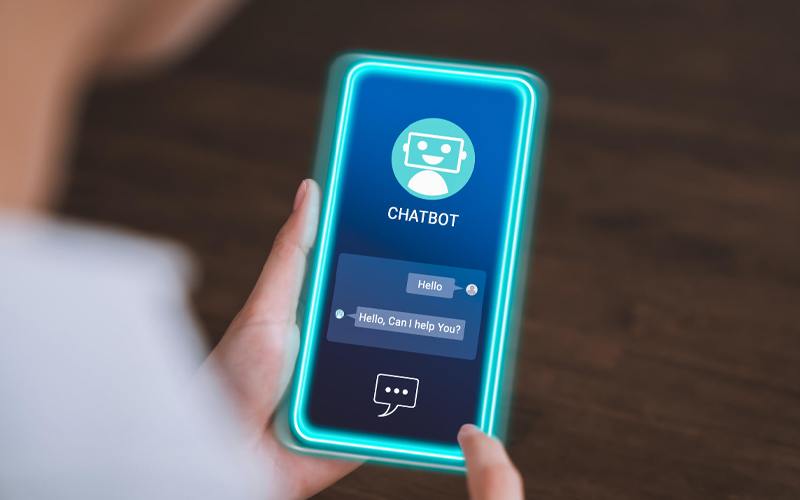
Next-gen AI in service management is not a shiny chatbot bolted onto an old workflow. Done well, it reshapes the workflow itself.
- from ticket intake to intent understanding
- from automation to agentic execution
- from dashboards to predictive service management
- from knowledge bases to knowledge orchestration
Instead of relying on rigid categories, AI can interpret user language, detect intent, and pull context from identity, device, recent changes, and known issues. That reduces misroutes and avoids the classic back-and-forth that drains time and patience.
The real leap is agentic behaviour. Systems that can take bounded action based on context, not just suggest next steps. EMA highlights this evolution as a move from static automation to AI that can trigger resolutions, run diagnostics, and manage exceptions with less hand-holding.
The keyword here is governance. Autonomy only works when clear guardrails are in place.
When AI consumes signals from logs, monitoring, endpoint telemetry, and ticket history, it can flag anomalies earlier and prioritise what will hurt the business most. This is where AIOps and ITSM start to converge into predictive service management. There are fewer surprises, faster root-cause isolation, and smarter escalation.
Generative AI (GenAI) can draft resolution steps, summarise ticket histories, and propose fixes, but it is only valuable if it is grounded in trusted internal knowledge. Gartner has warned that by the end of 2025, 30% of generative AI projects may be abandoned due to issues such as poor data quality, inadequate risk controls, and unclear value.
In ITSM, that translates to a practical rule: if the knowledge is messy, the answers will be confident and wrong. No service desk needs that.
what “good” looks like in real environments
A modern AI-enabled ITSM model tends to show up in small but meaningful wins that compound:
- a password reset that becomes a guided self-serve flow, not a ticket
- a recurring VPN failure that is flagged by pattern detection before Monday morning chaos
- a “slow laptop” complaint that gets contextual triage instead of generic steps
- a major incident where the AI drafts the timeline, actions, and handover summary in minutes
These are not futuristic promises. They are the kinds of improvements organisations see when AI is applied to the workflow, the data, and the operating model together.
how Infosys BPM can help
Next-gen AI in ITSM is not simply a tooling decision. It is an operating model upgrade spanning process, knowledge, automation, and governance.
Infosys BPM’s Service Desk Practice helps organisations modernise service management and IT service desk operations with a structured approach. This aligns AI with measurable outcomes including faster triage, stronger self-service, cleaner knowledge, and more consistent resolution quality. It also ensures that automation does not outpace control, especially when agentic workflows are introduced.
Frequently Asked Question
Legacy IT service desks rely on rule-based ticketing and manual Level-1 triage, whereas AI-driven support utilizes autonomous agents to predict and intercept system failures before they disrupt workflows. This structural shift moves IT operations from a reactive cost center to a proactive, self-healing productivity enabler.
Enterprises deploy air-gapped models and rigorous information security guardrails to ensure that proprietary code, employee access logs, and network telemetry remain within corporate firewalls. By utilizing role-based access controls and masking sensitive metadata, organizations prevent data leakage while maintaining strict regulatory compliance.
Machine learning models continuously audit software usage patterns and endpoint telemetry to identify unused SaaS subscriptions and redundant seat allocations automatically. Centralized dashboards flag inactive assets, allowing IT directors to reallocate budgets to high-priority infrastructure and cut waste by up to 30%.
Global organizations typically observe a 20% to 25% reduction in Level-1 support ticket volumes within four to six months of deploying ambient AI assistants. Automating password resets, software provisioning, and standard troubleshooting allows IT engineering teams to focus on core digital modernization projects. View our customer service outsourcing capabilities to benchmark your support transformation goals.