


Manufacturers generate unprecedented volumes of engineering and operational data, yet many organisations still struggle to convert that information into faster decisions and measurable business outcomes. Industrial foundation models address this challenge by combining domain-specific knowledge with advanced AI capabilities.
Unlike general-purpose AI, these models understand engineering concepts, manufacturing processes, and industrial data, helping organisations improve design, quality, and maintenance across the product lifecycle. As industrial AI continues to evolve, manufacturers can use these models to drive smarter operations while preserving critical engineering expertise.
Why industrial foundation models matter
General-purpose AI performs well when processing natural language, but manufacturing demands far more than language understanding. Engineers work with CAD models, bills of materials, simulation outputs, production records, maintenance logs, and machine telemetry, all of which follow established engineering principles.
Industrial foundation models are trained on these specialised datasets and learn the relationships between products, processes, equipment, and operational workflows. This domain awareness helps manufacturers make more informed decisions than conventional AI systems that lack manufacturing-specific context.
How foundation models in manufacturing differ from conventional AI
The strength of foundation models in manufacturing lies in their ability to understand engineering context rather than analyse isolated datasets. These models can integrate information from Product Lifecycle Management (PLM) platforms, Manufacturing Execution Systems (MES), Enterprise Resource Planning (ERP) applications, Industrial Internet of Things (IIoT) devices, digital twins, engineering documentation, and simulation environments. By connecting these data sources, they create a unified view of manufacturing operations that supports more accurate analysis and faster decision-making.
Unlike generic AI models, manufacturing foundation models reason within engineering constraints. They recognise product structures, production dependencies, operational sequences, and quality requirements, enabling engineers to solve complex problems with context-aware recommendations instead of generic responses. This capability shifts AI from a productivity tool to an engineering decision-support system.
Improving product design with industrial AI
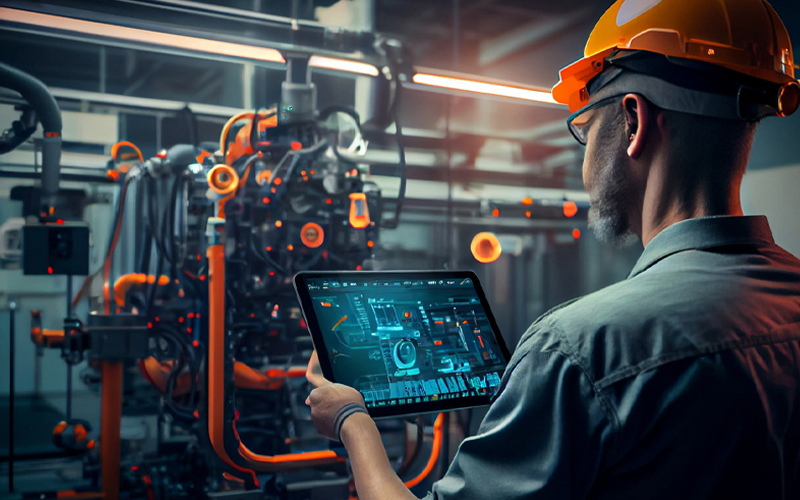
Product development often requires engineers to search historical documentation, review previous designs, validate specifications, and resolve manufacturability issues before production begins. These repetitive tasks consume valuable engineering time and can slow innovation.
With the help of industrial AI, industrial foundation models can retrieve relevant engineering knowledge, recommend proven design approaches, and identify potential manufacturing challenges early in the development cycle. Engineers spend less time searching for information and more time refining products, collaborating across teams, and accelerating innovation. The result is a more efficient design process that builds on existing organisational expertise instead of recreating it.
Strengthening quality management through contextual intelligence
Quality management depends on more than inspection results alone. Manufacturers need to connect production parameters, engineering specifications, inspection images, historical defect records, and operational data to identify the underlying causes of quality issues.
Foundation models in manufacturing analyse these interconnected datasets together rather than treating them as separate information sources. This broader view helps organisations:
- Detect production anomalies earlier
- Identify root causes more accurately
- Improve inspection consistency across facilities
- Support continuous quality improvement
These capabilities help manufacturers improve product quality while reducing waste and rework across production operations.
Enabling predictive maintenance with manufacturing foundation models
Maintenance teams manage increasingly complex assets that generate continuous streams of operational and sensor data.
Traditional maintenance strategies often rely on scheduled inspections or reactive repairs, which can limit operational efficiency.
Manufacturing foundation models combine equipment telemetry, maintenance histories, service manuals, operating conditions, and inspection records to identify patterns that may indicate developing equipment issues. This contextual understanding enables maintenance teams to:
- Prioritise maintenance based on equipment condition
- Reduce unplanned downtime
- Improve spare parts planning
- Extend asset life
- Increase operational resilience
By combining engineering knowledge with real-time operational data, industrial AI helps manufacturers move from reactive maintenance to proactive asset management.
Challenges and opportunities ahead
Successfully implementing industrial foundation models requires more than advanced technology. Manufacturers need strong data governance, integrated legacy and operational systems, high-quality engineering data, and trust in AI-generated recommendations. Close collaboration between business leaders, engineers, and technology teams is equally important to ensure AI complements existing workflows rather than disrupting them.
Despite these challenges, industrial foundation models offer significant opportunities. They help preserve institutional knowledge, accelerate engineering decisions, strengthen cross-functional collaboration, improve operational resilience, and support continuous innovation. As manufacturers continue their digital transformation journeys, these models are likely to become an important foundation for intelligent, connected, and data-driven operations.
How can Infosys BPM help manufacturers adopt industrial foundation models?
Infosys BPM helps manufacturers realise greater value from industrial foundation models by combining manufacturing expertise with intelligent process management, advanced analytics, and AI-enabled transformation services. By bringing together engineering knowledge, operational data, and industrial AI capabilities, Infosys BPM helps organisations improve product design, strengthen quality management, optimise maintenance strategies, and support better enterprise-wide decision-making while working seamlessly with existing manufacturing ecosystems.
Explore how the manufacturing industry BPM services from Infosys BPM can help your organisation adopt industrial foundation models, accelerate digital transformation, improve operational efficiency, and build intelligent manufacturing capabilities that drive long-term business growth.
Frequently asked questions
An industrial foundation model is an AI model trained on engineering and operational data rather than general web text. It learns the relationships between products, processes, equipment, and workflows from sources such as CAD models, bills of materials, simulation outputs, and machine telemetry. This domain awareness lets it support engineering decisions with context, not generic responses.
The difference is domain understanding. General-purpose AI excels at natural language but lacks manufacturing context, while industrial foundation models reason within engineering constraints, recognising product structures, production dependencies, and quality requirements. They integrate data from PLM, MES, ERP, IIoT, and digital twins to give context-aware recommendations. This shifts AI from a productivity tool to an engineering decision-support system.
Industrial foundation models accelerate design and strengthen quality by connecting engineering knowledge across the lifecycle. In design, they retrieve relevant documentation, recommend proven approaches, and flag manufacturability issues early. In quality, they analyse production parameters, specifications, inspection images, and defect records together to detect anomalies earlier and identify root causes. This reduces rework and waste while building on existing expertise.
Industrial foundation models enable predictive maintenance by combining equipment telemetry, maintenance histories, service manuals, and operating conditions to spot patterns that signal developing issues. Rather than relying on scheduled inspections or reactive repairs, teams prioritise maintenance by equipment condition. This reduces unplanned downtime, improves spare-parts planning, extends asset life, and moves operations from reactive repair to proactive asset management.
Successful adoption requires more than technology. Manufacturers need strong data governance, high-quality engineering data, and integration between legacy and operational systems, plus trust in AI-generated recommendations. Close collaboration between business leaders, engineers, and technology teams ensures AI complements existing workflows rather than disrupting them. Done well, these models preserve institutional knowledge and strengthen operational resilience.