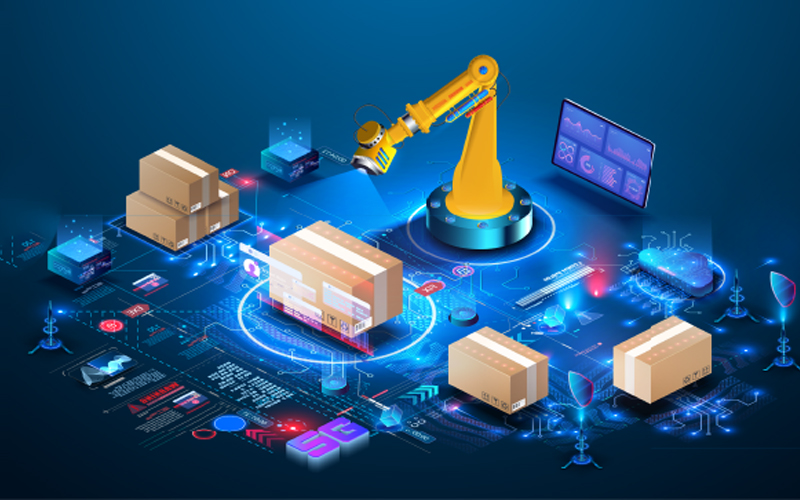



The retail industry has transitioned beyond the novelty of e-commerce into a state of total digital immersion. Organisations must re-engineer the entire business model to meet the demands of a hyper-informed, AI-empowered consumer base. Understanding the nuances of this shift is essential for maintaining a competitive edge in a landscape where technology and commerce are now inseparable.
The global market for retail digital transformation is projected to reach US $859.5 billion by 2030, growing at a CAGR of 18.8%. By understanding the key drivers of digital retail, businesses can position themselves to harness its potential for long-term growth and competitive advantage.
What is digital retail?
At its core, digital retail refers to the integration of digital technologies and tools into the retail ecosystem to enhance consumer experiences, streamline operations, and enable real-time data-driven decisions. It encompasses everything from e-commerce platforms and mobile apps to augmented reality (AR) and artificial intelligence (AI), all working in tandem to create seamless, personalised shopping experiences for consumers across multiple channels. It is a unified framework where physical and digital touchpoints coexist to create a frictionless journey for the customer, across stores and digital platforms
This ecosystem relies on a sophisticated backbone of cloud computing, Internet of Things (IoT) sensors, and advanced data analytics. In this environment, every interaction generates a data point that informs real-time business decisions. Digital retail leverages these insights to ensure that the right product is in the right place at the optimal price, regardless of whether the customer is browsing a physical aisle or social media feed.
The rise of digital retail: Key drivers

Several factors have catalysed the rise of digital retail. These include:
Shifting consumer expectations
Consumers today expect instant gratification and easy access to products. The rise of mobile shopping, AI-driven recommendations and 24/7 access to products has created an environment where traditional retail no longer suffices.
Technological advancements
Innovations like AI, machine learning, augmented reality, and Internet of Things (IoT) have given retailers the tools to automate processes, personalise customer experiences, and gain deep insights into consumer behaviour. These technologies are essential in ensuring that retailers stay competitive and meet rising consumer expectations.
Increased demand for personalisation
Consumers now expect experiences that are tailored to their preferences, whether it’s product recommendations, discounts, or even how they interact with brands. This trend has led to a demand for smarter, data-driven solutions that can analyse purchasing patterns and predict future buying behaviours.
Quantifiable benefits of digital retail
The implementation of a robust digital framework yields measurable improvements in both top-line growth and bottom-line efficiency. The benefits of digital retail manifest in these primary areas:
- Operational resilience: AI-driven demand forecasting significantly reduces the risk of stockouts and overstocking. Industry data shows that retailers employing AI and advanced analytics can achieve a 30% rise in productivity.
- Hyper-personalisation at scale: Digital transformation allows brands to treat every customer as an individual. By analysing historical data and real-time behaviour, retailers can offer bespoke recommendations that increase conversion rates and average order values.
- Enhanced employee productivity: Digital tools empower store associates by automating repetitive administrative tasks. This allows staff to transition into more strategy-focused roles, providing the high-value human interaction that technology alone cannot replicate.
- Data-driven insights: Retailers can leverage customer data to predict trends, optimise inventory, and design targeted marketing campaigns. This leads to more informed business decisions, improved demand forecasting, and stronger customer loyalty.
- Scalability: Digital retail solutions are highly scalable, allowing retailers to expand into new markets without the need for significant investment in physical infrastructure. Cloud-based platforms and AI tools can help businesses adapt to changing market conditions and consumer preferences.
Challenges of digital retail transformation
While the benefits of digital retail are vast, businesses must be mindful of certain challenges:
- Security and data privacy: As digital interactions increase, so do the risks of cyberattacks. Retailers must ensure they have robust data security protocols in place to protect customer information and comply with regulations like GDPR.
- High initial investment: The implementation of advanced digital tools and systems can be expensive. While the long-term benefits outweigh the costs, businesses must be prepared for significant upfront investment in technology and training.
- Integration complexity: Integrating digital systems with legacy infrastructure can be complex and time-consuming. Retailers need to ensure smooth data flows between physical and digital channels, which may require significant system upgrades and staff retraining.
In response to these challenges, transparency and data ethics must remain at the forefront of the strategy. As retailers collect more granular data to fuel their AI models, maintaining consumer trust becomes a critical differentiator. Brands that prioritise explicit consent and secure data handling will secure long-term loyalty in a market that is increasingly sensitive to privacy.
How can Infosys BPM help in digital retail transformation?
Infosys BPM empowers retailers to master the complexities of the modern digital landscape through an AI-first approach. We provide end-to-end retail solutions that optimise the digital supply chain, streamline trade promotions, and enhance store operations. By leveraging our deep domain expertise and advanced digital capabilities, we help brands drive growth and boost productivity.
Frequently asked questions
E-commerce is a channel — a website or app through which transactions occur. Digital retail is a unified operating framework in which physical and digital touchpoints coexist to create a frictionless customer journey across stores, apps, social media, and digital platforms simultaneously. It integrates cloud computing, IoT sensors, AI, augmented reality, and advanced data analytics into a single ecosystem where every interaction generates data that informs real-time business decisions — ensuring the right product is in the right place at the optimal price, whether the customer is browsing a physical aisle or a social media feed.
Three risk categories require deliberate governance. Security and data privacy: as digital interactions increase, so does cyberattack exposure — requiring robust data security protocols compliant with GDPR and equivalent regulations, with transparency and data ethics at the forefront of strategy. High initial investment: advanced digital tooling carries significant upfront costs in technology and training that must be modelled against long-term returns before commitment. Integration complexity: connecting digital systems with legacy infrastructure requires smooth data flows between physical and digital channels, significant system upgrades, and staff retraining. As retailers collect more granular data to fuel AI models, brands that prioritise explicit consent and secure data handling will secure long-term loyalty in a market increasingly sensitive to privacy.
These three technologies form an interdependent backbone rather than parallel investments. IoT sensors generate continuous data streams from physical environments — shelf sensors, foot traffic counters, RFID inventory tags — that feed real-time operational decisions. AI and machine learning process this data alongside digital channel behaviour to power demand forecasting, dynamic pricing, personalised recommendations, and predictive inventory management. Cloud computing provides the scalable infrastructure that makes this processing economically viable at enterprise scale and enables rapid expansion into new markets without physical infrastructure investment. The maturity of digital retail architecture is determined by how tightly these three layers are integrated — not by the sophistication of any single component.
With an 18.8% CAGR driving the market toward $859.5 billion by 2030, the sequencing of investment determines whether transformation delivers compounding returns or fragmented capability. Retailers should prioritise in three phases: first, data infrastructure — cloud platforms, IoT integration, and unified customer data foundations — because every downstream AI and personalisation capability depends on data quality and accessibility. Second, AI-driven demand forecasting and inventory optimisation, where the 30% productivity uplift from advanced analytics is most directly measurable and delivers immediate operational ROI. Third, customer-facing personalisation and omnichannel experience investment, which builds on the data and operational foundations to drive conversion rate improvement and average order value uplift. Attempting customer-facing AI without the data foundation produces brittle personalisation that erodes rather than builds trust.