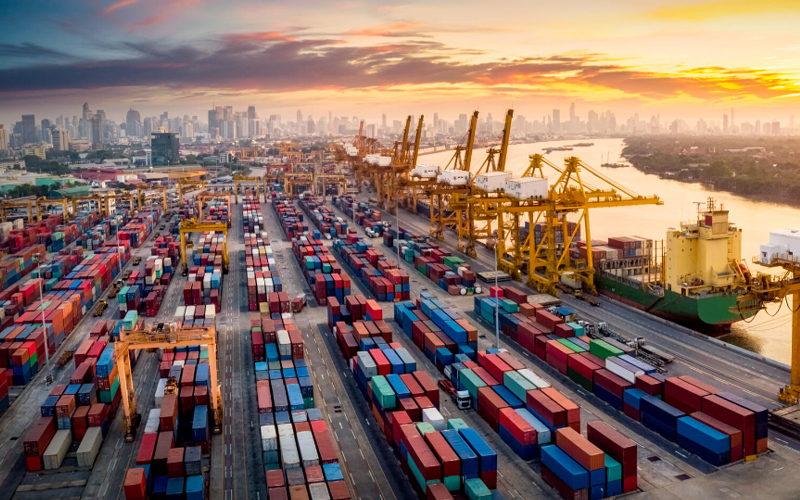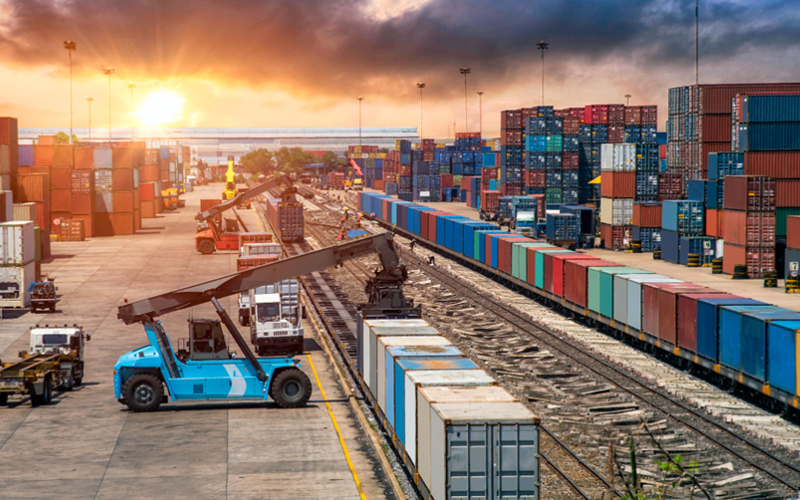



When we consume any kind of media, we rarely stop to think about the path it has taken to reach us. Yet, the media supply chain is every bit as real as a traditional one. In a traditional supply chain, physical goods move from factory to buyer or consumer. In the same way, in media supply chains, content travels through a series of steps before it can be accessed by us.
what exactly is the media supply chain?
The media supply chain includes every step that content takes from creation to consumption. The product is a finished media asset like a movie or TV show or audio assets for podcasts. The raw material is all that is involved in the actual creation of the final asset. This could include raw videos and audio material, sound effects, graphics, music, etc. Essentially, this supply chain includes several stages like ideation, production, storage, distribution and performance tracking.
Why is media supply chain optimization so important?
The quantum of content being generated is increasing rapidly. The types of content that can be produced and the multitude of platforms across which it can be delivered has increased. For example, the same piece of content could be:
- Repurposed into short-form clips
- Adapted for different platforms
- Localised into multiple languages
- Customised for different audience segments
This means what was once a linear process has evolved into a complex, multi-step ecosystem. Content now needs to be delivered to different end points — it could be televisions, laptops, VR headsets or smart phones. Companies like Netflix strengthen their media supply chain by partnering with telecom providers and device manufacturers to ensure seamless, last-mile content delivery directly to consumers.
Lack of proper planning and organisation could spark chaos. Teams could end up recreating content that already exists just because they are unable to find it. Multiple versions of the same file could be floating across systems. These are precisely some of the reasons why optimisation in media supply chains is required.
What does optimisation in this context really mean?
Optimisation in media supply chains is not just about operational efficiency, though that is quite important. Data centres that power media processing consume huge amounts of energy. An optimised media supply chain will avoid redundant processing, which directly reduces the carbon footprint. At its core, optimisation is about making the media supply chain faster, more efficient, less error-prone, scalable and more ready to adapt to trends. This requires the building of a system where the content actually flows in a smooth manner, teams stay aligned and every content asset is easy to find, reuse and distribute. If turnaround times are too long, the best ideas could lose impact because it has taken too long for them to reach the audience.
How optimised environments help media supply chains:
better collaboration: Media supply chains involve large teams of creators, editors, designers, marketers and others working together towards a quality end product. If the environment is unoptimised, collaboration becomes tough. Files would need to be shared across tools that are disconnected and feedback loops are slow. Version control becomes a constant challenge. Optimisation helps tackle these challenges, improving efficiency and the overall quality of the output.
enhanced content governance: When content moves across platforms, companies need to know who owns each piece of content, where it is being used and whether it complies with regional regulations. For instance, in India, content may need to comply with local content guidelines and avoid certain sensitive themes. In the European Union, platforms must meet requirements under directives like the Audiovisual Media Services Directive (AVMSD), which includes quotas for European content and strict rules around advertising and data privacy. Without strong content governance, the same piece of content could unintentionally violate local laws in different regions. An optimised media supply chain ensures rights and permissions are properly managed and compliance risks are reduced.
easier management of content at scale: With the high consumption of content, there is a continuous need for increased production volumes. Organisations need to create more content, for various platforms, at a faster pace. Without scalable systems, this growth can become unsustainable. Media supply chain optimisation ensures that operations can handle increasing demand without reaching breaking point. It introduces processes and technologies that can scale without any strain.
The Global Media Supply Chain market size was valued at $5.8 billion in 2024, and is forecasted to reach $14.2 billion by 2033, growing at a robust CAGR of 10.6%. As content ecosystems expand, optimisation is no longer an option. It is foundational. The volume and variation of content mean that without an optimised media supply chain, organisations risk inefficiency, inconsistency, and missed opportunities. Organisations that work towards flexible and optimised supply chains are the ones that are poised for growth, driving engagement, impact and business outcomes.
How IBPM can help
Enterprises today operate in a world shaped by constant disruption — volatile demand, geopolitical uncertainty, and rising cost pressures. Traditional, linear supply chains built for predictability are no longer enough. What’s needed instead are AI-powered, self-optimising systems that can sense change early, make smarter decisions, and act in real time across the entire value chain. Infosys brings this to life through AI-powered supply chain services that combine Generative AI, Agentic AI, and real-time control tower orchestration — turning supply chains into intelligent, connected, and execution-ready ecosystems.
Frequently asked questions
The media supply chain governs the end-to-end journey of digital assets, encompassing raw material ingestion (audio tracks, footage, graphics), production, storage, multi-platform distribution, and performance tracking. Managing this ecosystem requires rigorous digital asset management and governance.
According to industry reports, the Global Media Supply Chain market is projected to grow from $5.8 billion in 2024 to $14.2 billion by 2033 at a 10.6% CAGR. This growth is driven by exponential increases in content demand, multi-format repurposing, and regional localization requirements.
Distributing media across international jurisdictions requires adherence to local broadcasting quotas and regional privacy laws, such as the EU's Audiovisual Media Services Directive (AVMSD). Optimised supply chains embed automated rights management and compliance checks to prevent unintentional legal violations.
Processing digital media assets requires heavy data centre compute capacity that consumes substantial energy resources. Optimised media workflows eliminate redundant file processing and storage duplication, directly reducing the corporate carbon footprint associated with digital content distribution.