


In 2025, the global aviation sector faces a complex web of airline challenges — from tight profit margins and fleet delays to cyber‑fraud risks and workforce shortages. At the same time, technology offers powerful tools to enhance safety, resilience, and trust across operations. This article explores how leveraging modern aviation safety technology can help airlines navigate the current turbulence while restoring confidence among passengers, regulators, and stakeholders.
industry context: a sector under pressure
Analysts expect the industry to surpass US$1 trillion in revenues in 2025, while total costs also climb to approximately US$940 billion. This leaves airlines with a narrow net margin of around 6.7 per cent. These economics mean that even modest disruptions — fuel volatility, delays, or fraud — can quickly erode profitability.
Fuel remains one of the biggest cost buckets. Despite a modest dip in jet‑fuel prices to about US$87 per barrel for 2025, volatility persists, and older aircraft — with a global average fleet age of 14.8 years — burn more fuel and require more maintenance. This ultimately increases both costs and emissions. Meanwhile, supply‑chain bottlenecks continue to disrupt aircraft delivery and maintenance, forcing airlines to operate older fleets longer, with all attendant efficiency, safety, and environmental drawbacks.
Beyond economics and operations, digital‑age vulnerabilities are rising. As airlines expand online services — booking portals, loyalty programmes, and biometric boarding — they become increasingly exposed to identity fraud, payment fraud, and cyber‑attacks. According to recent industry estimates, airlines lose around 1.2 per cent of online revenue to payment fraud annually — a direct hit to already tight margins.
Given this backdrop of structural, financial, and security‑related pressures, the current state of airline industry challenges demands a multidimensional response — and technology stands at the centre of the solution.
where aviation safety technology makes a difference

- identity-orchestration and fraud prevention systems
- predictive maintenance and real‑time fleet monitoring
- enhanced air‑traffic and flight‑path safety systems
- automation and workforce enablement
One of the most immediate gains from digital technology is stronger identity and fraud management. Rather than relying solely on conventional document checks or payment‑card authorisation, modern identity‑orchestration frameworks combine multiple signals — biometric verification, device/internet‑connection reputation, behavioural analysis, and transaction risk scoring — to assess and block potentially fraudulent bookings or logins.
This layered approach also helps airlines reliably secure loyalty accounts, frequent‑flyer programmes, and backstage staff portals. This helps in mitigating risks posed by synthetic identities, credential stuffing, and insider abuse. Reducing identity fraud reduces financial losses and enhances passenger trust and brand integrity.
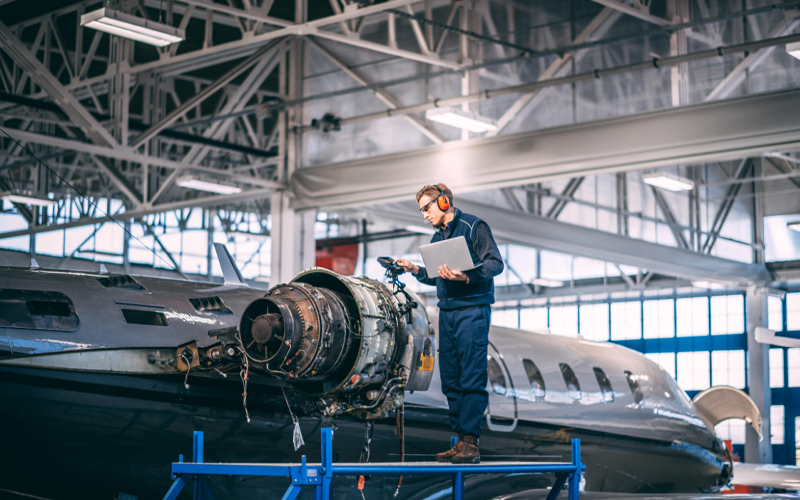
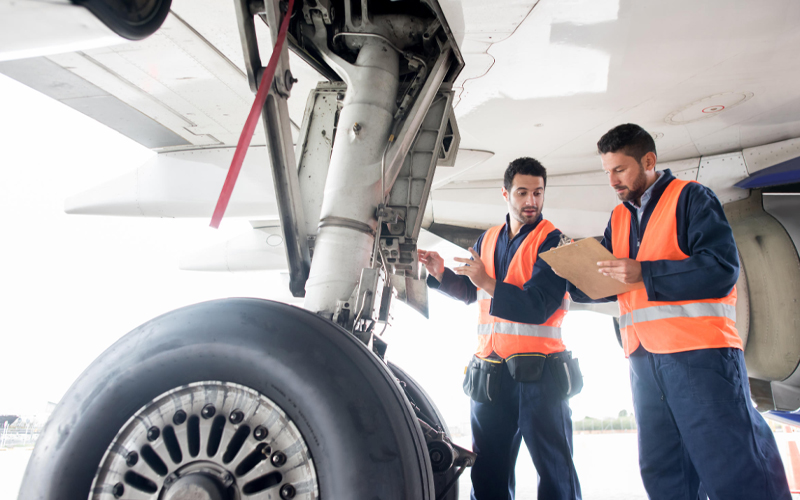
Relying on ageing aircraft underlines the importance of robust maintenance regimes. Aviation safety technology now includes AI‑driven predictive maintenance platforms that monitor aircraft health through real-time data, flag early signs of wear, and optimise maintenance scheduling. This helps avoid unplanned downtime, AOG (Aircraft on Ground) events, and improves operational reliability and safety without excessive maintenance overhead.
By extending aircraft life safely and cost‑effectively, airlines can manage fleet‑age challenges while gradually integrating newer, more efficient jets or sustainable‑fuel aircraft — all without sacrificing safety or compliance.
Modern air‑traffic control and navigation systems benefit from digital upgrades that use data‑link communications, satellite-based surveillance, and advanced flight‑path monitoring tools. Technologies like ADS‑C combined with ADS‑B (satellite and ground‑based aircraft position tracking) significantly improve accuracy for long‑haul and oceanic flights, beyond traditional radar coverage.
These improvements in surveillance and situational awareness contribute directly to aviation safety, reduce collision and navigation risks, and enable smoother traffic management even under growing demand.
Labour shortages — pilots, maintenance crew, and ground staff — are an enduring challenge. Automation of routine ground‑handling tasks, digital workflows for check‑in, baggage handling, customer service, and documentation can relieve pressure on stretched human resources while reducing human error.
At the same time, digital training platforms — VR/AR simulation or AI‑assisted e‑learning — can upscale maintenance and operations staff faster and more cost‑efficiently. This ensures that workforce constraints do not become a bottleneck for safety or performance.
business benefits: why trust and safety must be priority number one
- Revenue protection: Reducing identity fraud and payment losses directly shields slim margins and avoids losses that might otherwise wipe out profits.
- Operational continuity: Predictive maintenance and advanced ATC/flight‑path systems reduce unplanned downtime, maintenance delays, and cancellations. This boosts reliability and customer confidence.
- Reputation and regulatory compliance: Robust security and compliance systems safeguard passenger data, support regulatory adherence, and mitigate liability — crucial in regions with strict data‑protection and aviation‑safety norms.
- Sustainability and long-term viability: Efficient fleet use, gradual transition to newer aircraft or sustainable aviation fuel (SAF) platforms and reduced environmental impact all contribute to long‑term resilience.
conclusion
Airlines face the convergence of tight economics, ageing infrastructure, and growing digital exposure, so leaders must treat trust and safety as core investments, not optional add-ons. When they combine modern aviation safety technology with a clear digital roadmap that covers identity orchestration and fraud prevention, predictive maintenance and aircraft-health monitoring, enhanced air-traffic and navigation systems, and automation-led staff training, they convert airline challenges into gains in efficiency, resilience, and trust.
If you are looking for a partner to strengthen digital trust across every travel journey, Infosys BPM offers specialised trust and safety solutions for online travel agencies (OTAs). Infosys BPM helps OTAs secure passenger journeys, streamline digital operations, and build a more connected, compliant, and resilient airline ecosystem.
Frequently Asked Question
Identity orchestration reduces fraud by analyzing multiple risk signals—such as biometrics, device reputation, and behavioral patterns—in real-time during booking. Traditional payment authorization often misses synthetic identities, costing airlines approximately 1.2% of online revenue annually. A multi-layered orchestration layer blocks these fraudulent transactions instantly, directly protecting net margins.
Yes, AI-driven predictive maintenance extends fleet life by identifying component wear before failure occurs, preventing Aircraft on Ground (AOG) events. With the average global fleet age at 14.8 years, utilizing real-time health monitoring is critical for safety and efficiency. This technology reduces unplanned maintenance costs and allows airlines to safely defer capital expenditure on new aircraft.
Automation mitigates shortages by handling high-volume, repetitive tasks like baggage tracking and documentation, freeing human staff for critical operations. As labor constraints persist in pilot and ground crew roles, digital workflows ensure operational continuity. This shift preserves service levels and safety standards even during periods of high staff turnover.