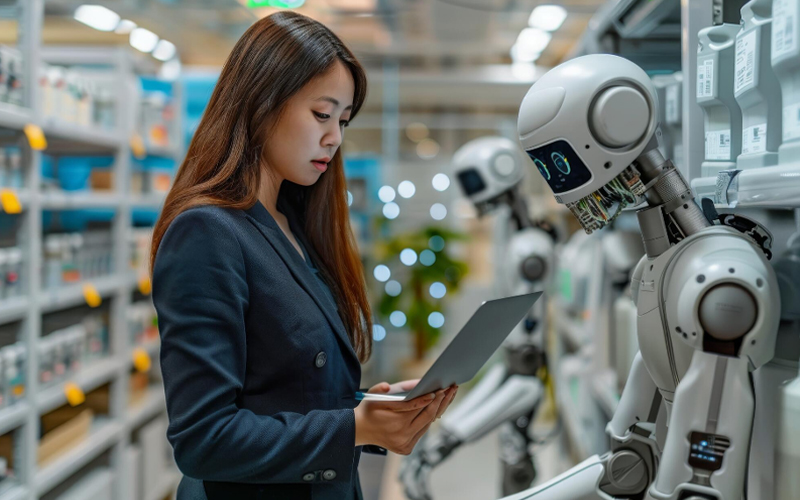



Enterprises built early AI systems around human-in-the-loop to retain control over decisions. That model suited a world where automation remained limited and predictable. Today, AI agents execute complex workflows, interact with enterprise systems, and operate continuously. This shift has exposed a structural limitation: constant human intervention does not scale. As a result, organisations are moving towards human-on-the-loop, where autonomy operates within clearly defined boundaries and humans supervise rather than execute.
Why human-in-the-loop breaks at scale
At its core, human-in-the-loop embeds human validation into every decision. While this ensures accuracy, it slows down execution and limits throughput. What once acted as a safeguard now acts as a constraint.
This becomes more visible in high-volume environments:
- Every approval introduces latency.
- Every checkpoint reduces system speed.
- Every dependency on humans limits scalability.
As enterprises expand AI across business functions, the model struggles to keep pace. The issue does not lie in AI capability, but in workflows designed around human dependency.
Human-on-the-loop: a different operating model
Human-on-the-loop changes the role of humans entirely. Instead of participating in every step, humans supervise systems that operate independently.
This model follows a simple principle:
AI acts by default. Humans intervene only when required.
That shift allows organisations to maintain control without slowing down execution. It also enables AI systems to function continuously, without waiting for approvals. Control moves from real-time decisions to predefined system design.
Rethinking control in AI systems
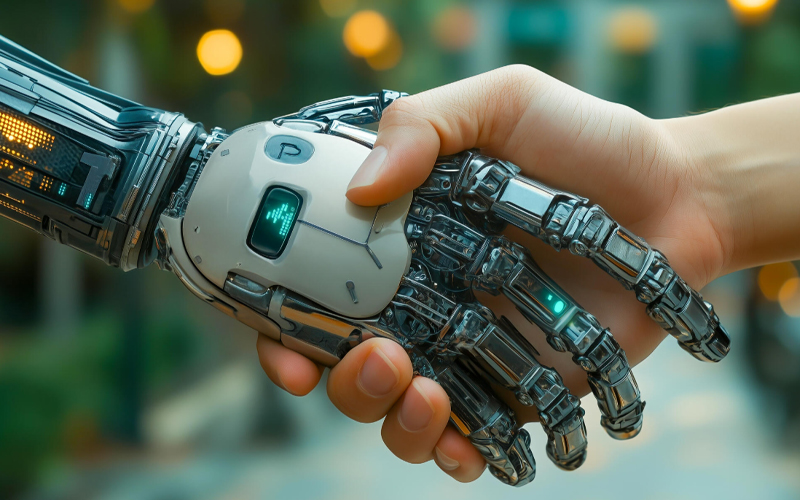
The move from human-in-the-loop to human-on-the-loop forces a change in how organisations think about control.
Earlier, control meant approving actions.
Now, control means defining boundaries.
This shift leads to new design questions:
- What actions should AI perform independently?
- Where should you enforce the limits?
- When should escalation occur?
By answering these questions upfront, organisations reduce the need for constant oversight. Control becomes embedded within the system rather than applied externally.
The limitation of static integrations
Most enterprise systems still rely on static integrations, such as fixed APIs, predefined workflows, and rigid logic paths. These structures cannot support AI agents that adapt, reason, and make decisions dynamically.
Static systems create friction. They limit flexibility, restrict tool usage, and fail to respond to changing contexts. As AI agents become more capable, these limitations become more visible.
Enterprises need systems that match the adaptive nature of AI. Without this shift, even advanced AI models remain constrained by outdated infrastructure.
Model Context Protocol (MCP): enabling controlled flexibility
To address this gap, newer approaches such as Model Context Protocol (MCP) introduce a more flexible integration layer. MCP allows AI agents to access tools dynamically, share context across systems, and operate within governed environments.
Unlike static integrations, MCP supports both adaptability and control. It ensures that AI systems can function independently while adhering to predefined permissions. This aligns directly with human-on-the-loop, where governance exists within the architecture itself, not through manual intervention.
From prompt engineering to supervision
The evolution of AI usage also reflects a shift in enterprise capabilities. Early adoption focused on prompt engineering, guiding AI through carefully written inputs. While effective in isolated use cases, this approach does not scale in complex environments.
Today, organisations focus on supervising AI systems rather than instructing them. The emphasis has moved towards defining behaviour, managing risk, and monitoring outcomes.
This progression highlights a broader trend: the value no longer lies in controlling individual outputs, but in designing systems that consistently produce reliable results.
No single model fits every scenario
The choice between human-in-the-loop and human-on-the-loop depends on context. Organisations must evaluate risk, scale, and impact before selecting a model.
A practical approach looks like this:
- Use human-in-the-loop for high-risk, sensitive decisions.
- Adopt human-on-the-loop for scalable, high-volume operations.
- Apply stricter oversight in regulated environments.
This ensures that organisations balance efficiency with accountability. The goal is not to replace one model entirely, but to apply the right model in the right context.
Designing systems for secure autonomy
Implementing human-on-the-loop requires a structured approach. Organisations must design systems where control exists by default.
This involves:
- Defining clear policies that guide AI behaviour
- Setting constraints on data, tools, and actions
- Monitoring system performance continuously
- Creating escalation paths for exceptions
Each layer reinforces the same principle: autonomy must operate within a controlled framework. Without this structure, systems either become inefficient or risky.
Conclusion: the future lies in governed autonomy
The transition from human-in-the-loop to human-on-the-loop represents a shift in how organisations scale AI. The focus no longer lies in improving models alone, but in redesigning systems around autonomy and control.
By embedding governance into system architecture, enterprises achieve both speed and reliability. This approach allows AI to operate independently while maintaining accountability. As organisations continue this transition, Infosys BPM supports enterprises its business transformation services, enabling the design of governance frameworks, integration of AI into operational workflows, and the development of secure, scalable, and well-governed AI ecosystems.
Frequently asked questions
Human-in-the-loop requires people to validate or approve AI decisions at each step, while human-on-the-loop lets AI act independently within defined boundaries and keeps humans in a supervisory role. The shift improves speed and scalability without removing accountability.
Human-in-the-loop adds latency because every approval, checkpoint, and dependency on people slows execution. In high-volume environments, that model becomes a bottleneck and limits the ability of AI systems to operate continuously.
Human-on-the-loop shifts governance from manual intervention to system design. Instead of approving every action, organisations define boundaries, escalation rules, and controls that guide AI behaviour safely and consistently.
Human-in-the-loop is better for high-risk, sensitive, or heavily regulated decisions where direct human review is essential. Human-on-the-loop is better for scalable, high-volume processes where AI can act autonomously within predefined guardrails.
Model Context Protocol supports more flexible, governed integration between AI agents and enterprise tools. It allows systems to access context dynamically while still operating within defined permissions, which makes supervised autonomy easier to implement.