

Fraud, theft, and leakage collectively account for heavy annual revenue for utility companies worldwide, affecting power, water, and oil and gas providers alike. Electricity theft and other non-technical losses (including billing errors and fraud) total staggering amounts per year globally.
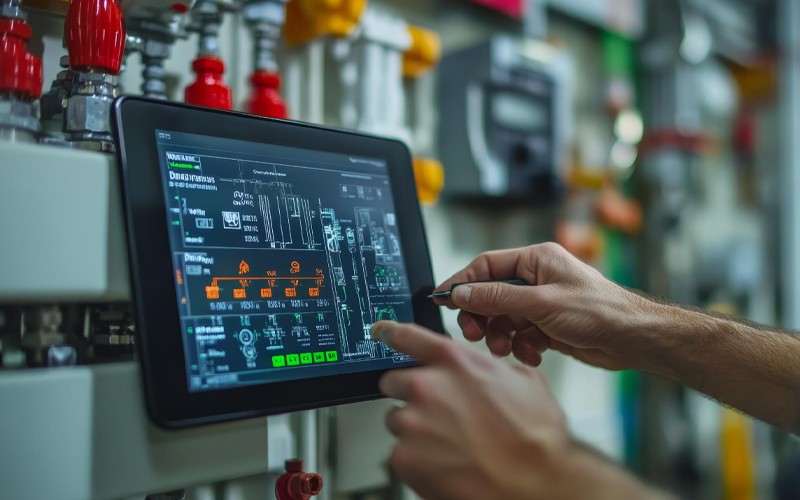
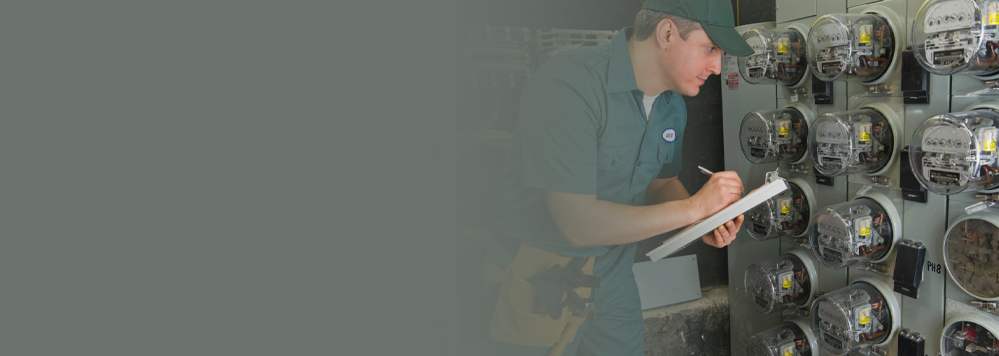
Technology is making a definite mark in ensuring a reduction in energy theft, with smart meters leading the charge. Collecting data every 15-30 minutes, these meters detect sudden dips in consumption that may point towards meter tampering. They flag unusual patterns in consumption and mismatches between substation-level generation data and household-level consumption data. By utilising machine learning models trained on historical data, utilities can now score accounts by theft probability.
However, deploying smart meters involves distinct opportunities and challenges.
Opportunities
AI and advanced analytics: AI and advanced analytics enable utilities to study millions of electricity usage records to distinguish normal behaviour from suspicious patterns. Machine learning models such as gradient boosting and neural networks, trained on smart meter time-series data, proactively report anomalies. For example, a study on home electricity theft applied AI-based machine learning models to appliance-level time-series data. One model, Extreme Gradient Boosting, achieved accuracy scores above 90%, demonstrating strong potential for AI-driven theft detection in smart home environments.
Integration with GIS data: It is not enough just to detect utility theft. Where in the distribution network did the theft occur? This is a question that must be answered as accurately as possible for the field teams to take necessary action – especially in dense urban networks. Overlaying smart meters with GIS data and network topology maps helps with just this by improving loss localisation.
Regulatory momentum: Around 1.06 billion smart meters (electricity, water, and gas) were installed worldwide by the end of the year 2023. Smart meters are getting the push needed since several regulators across the globe are mandating smart meter rollouts specifically citing loss reduction as a justification. For example, in the United Kingdom, the government has mandated that energy suppliers transition the vast majority of consumers to smart meters by the end of 2030, with binding annual milestones for new installations and pre-emptive replacements beginning in January 2027.
Challenges
Data volume and velocity: A single smart meter generates thousands of data points per year. Across millions of meters, this creates significant infrastructure requirements for storage, processing, and real-time analytics.
Flagging of false positives: Machine learning models often flag unusually low consumption as potential theft. However, these low consumption behaviours could be due to reasons such as vacations or low occupancy. These false positives create invalid customer complaints and erode the operational efficiency of the field team.
Privacy and data governance: Granular interval data reveals the consumption and behaviour patterns of households. It could reveal details such as occupancy hours, sleep schedules, and appliances usage patterns. However, certain countries and locations, the General Data Protection Regulation (GDPR) in Europe for example, have strict rules in place to ensure the privacy and data protection of consumers.
Cybersecurity threats: Energy infrastructure is vulnerable to cybersecurity threats. Since smart meters are networked endpoints, they could be used to manipulate readings or serve as entry points to the wider utility network.
Infrastructure gaps in emerging markets: Unfortunately, many countries with the highest likelihood of utility theft do not have sufficient rollout of Advanced Metering Infrastructure (AMI). AI-based theft detection works on comparison – by checking the utility of previous months and also that of other houses in the neighbourhood. When AMI has patchy coverage, it limits the comparative analysis that makes anomaly detection effective.While there is no doubt that smart meter data is revolutionising the way utilities approach theft detection, its efficacy will depend on how successfully the challenges accompanying it are addressed. By 2035, smart meter installations are projected to reach 3.9 billion globally, generating $46 billion in annual revenue. For utilities that are working towards building the right infrastructure, smart meters are the foundation of a more resilient and revenue-secure future.
How can IBPM help
The increasing automation of utility infrastructure and its dependence on large-scale computer networks have made systems vulnerable to cyberattacks and hostile actors. Infosys BPM brings over two decades of experience in the utilities sector, offering advanced billing assurance and energy theft detection solutions that use pattern recognition and usage analytics to identify complex fraud, pinpoint leakage areas, and deliver actionable insight. Our fraud solutions combine domain expertise, process management, and data visualisation to provide scalable, future-proof loss assurance and revenue coverage across all data streams.
Frequently asked questions
Smart meters collect granular data every 15-30 minutes, allowing machine learning models to identify sudden dips in consumption or mismatches between substation generation and household usage. Enterprises typically observe that AI-driven theft detection can achieve accuracy scores above 90% by analysing time-series data for anomalies.
Key challenges include managing the high volume and velocity of data, as well as minimising false positives that arise from legitimate low-consumption behaviours like vacations. Industry benchmarks indicate that well-governed data governance and sophisticated ML pipelines are required to prevent invalid customer complaints and maintain field team efficiency.
Overlaying smart meter anomalies with GIS data and network topology maps enables field teams to pinpoint the exact location of theft within dense urban networks. This spatial intelligence improves loss localization and allows for more targeted interventions, directly reducing revenue leakage for power and water providers.
Regulators worldwide are mandating smart meter rollouts to drive loss reduction and improve grid resilience, with binding milestones often set for the next decade. Standard enterprise architectures must align with these mandates, such as the GDPR in Europe, to ensure that data collection balances theft detection with consumer privacy protection.