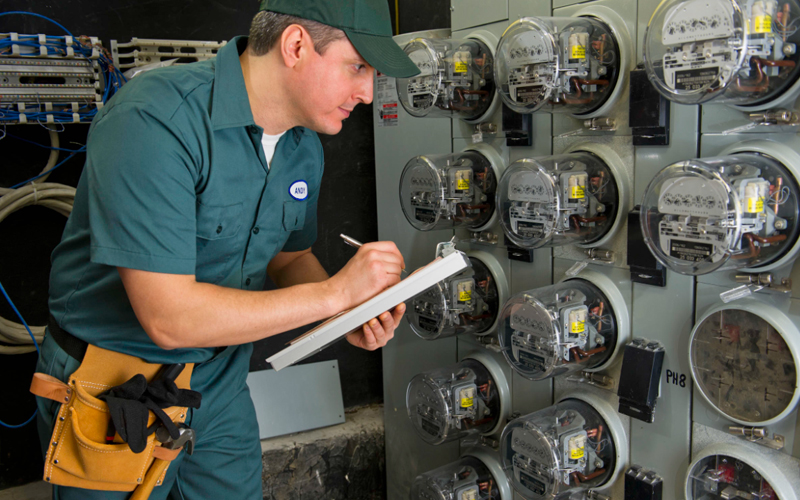



Advanced Metering Infrastructure (AMI) was originally deployed to automate meter reads and eliminate estimated billing. That use case, while valuable, has been overtaken by what the data itself makes possible. Global smart meter installations are projected to double from 1.7 billion in 2023 to 3.4 billion by 2033, generating data volumes that legacy analytics systems were never built to handle.
Smart meter analytics, powered by AI and machine learning, has converted the meter from a billing instrument into a real-time intelligence platform. It is capable of detecting outages, identifying energy theft, forecasting demand, and mapping individual energy consumption patterns at a resolution that analogue infrastructure could never produce.
Smart meters: the foundation of digital energy infrastructure
A smart meter is, in operational terms, a distributed sensor. Deployed across millions of network nodes, it captures time-stamped consumption and voltage data continuously. It generates hundreds of millions of individual reads every day across a large utility network. Where an analogue meter produced one monthly reading per customer, AMI delivers up to 2,880 data points per customer per month on a 15-minute sampling interval.
Three new grid-level capabilities emerge from this foundation:
- Real-time outage detection through meter last-gasp signals
- Feeder-level load visibility for demand management
- Continuous monitoring of voltage conditions across substations and transformers.
How AI converts smart meter data into grid intelligence
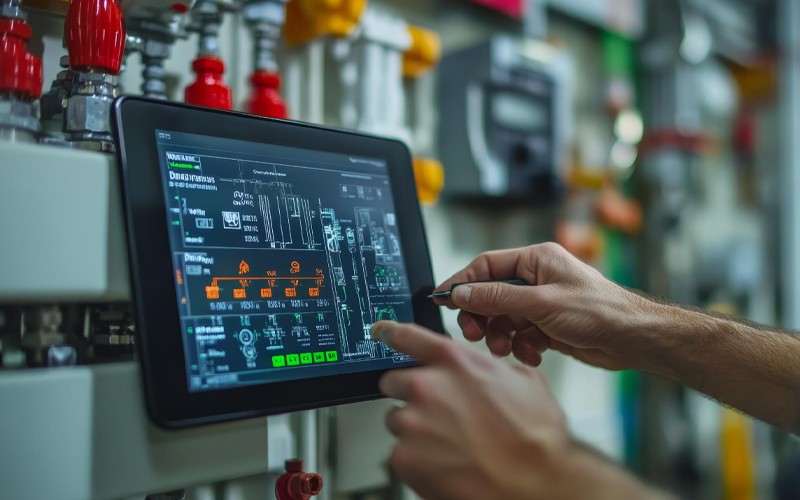
To extract value from this influx of data, utilities are replacing rigid, rules-based legacy systems with AI models capable of identifying deviations at massive scale and speed. This intelligence has a few critical operational areas.
Outage detection and load forecasting
Smart meter last-gasp signals and voltage signatures localise outages to specific feeders within seconds, enabling faster crew dispatch and restoration sequencing. AI applied to historical interval data produces feeder-level load forecasts accurate enough to support demand response programmes.
Energy theft detection and revenue protection
Energy theft via meter tampering, illegal tapping, or reverse flow manipulation is one of the most persistent sources of distribution revenue loss. AI analysis of AMI data flags bypass cases, irregular usage patterns, and voltage anomalies that indicate physical interference with metering infrastructure. Revenue protection once depended on field inspections triggered by complaints. Now, it depends on pattern recognition running continuously across the full customer base. Every billing read becomes a data point checked against expected behaviour for that customer, season, and load class.
Improving data quality: machine learning in meter data management
Meter data management has long relied on Validation, Estimation, and Editing (VEE), which are rules-based processes designed to flag suspicious reads for manual review. Static rules generate large volumes of false positive exceptions, creating review backlogs that cost time and produce billing errors.
Autoencoder-based deep learning models trained on historical AMI data learn what normal consumption looks like across the customer base and assign a severity score to flagged reads rather than treating every exception identically.
These approaches have demonstrated a 63% reduction in false positive exceptions in high-usage scenarios, translating into fewer manual interventions, fewer truck rolls, and fewer billing disputes. The principle mirrors real-time fraud detection in financial services: reads that pass the model's normalcy check move immediately to final measurement, while only genuinely suspect data routes to manual validation.
unlocking energy consumption patterns for customer engagement
Utilities that act on these patterns can design and target products based on verified household behaviour. Consumers who actively engage with their own consumption data achieve average energy savings of around 3%, and personalised usage insights, time-of-use tariff recommendations, and efficiency programme offers all carry more weight when they reflect what a customer's meter actually shows.
edge computing and the next frontier of meter intelligence
Edge analytics embedded within next-generation meters allows anomaly detection, voltage monitoring, and load disaggregation to occur at the point of data generation, without waiting for centralised cloud processing. A meter that can detect a voltage fluctuation locally and trigger an immediate alert responds faster than one dependent on a transmission-analysis-response cycle.
Extracting sustained value from smart meter analytics requires more than AI models. It requires clean data pipelines, integrated meter data management, and the operational discipline to maintain revenue assurance and billing accuracy across millions of endpoints.
How can Infosys BPM help with smart meter analytics?
Infosys BPM meter-to-cash services are built to support utilities at this level. We help energy organisations modernise their meter-to-cash operations, improving billing accuracy, strengthening revenue protection, and enabling the customer analytics that convert AMI data investment into measurable commercial value.
Frequently asked questions
AI transforms AMI from a billing tool into a real time intelligence layer that speeds outage detection, improves feeder level load forecasts, reduces false positive data exceptions, and automates energy theft detection. This helps utilities restore service faster, reduce truck rolls, and strengthen revenue assurance.
Machine learning models, such as autoencoders, learn normal consumption patterns at scale and score anomalies so only genuinely suspicious reads go to manual review. This reduces false positives and backlog, lowers operational costs, and improves billing accuracy compared with static rule based systems.
By continuously analysing consumption signatures, voltage anomalies, reverse flow indicators, and deviations from expected customer patterns, AI can flag likely tampering or illegal connections. This allows utilities to prioritise inspections and reduce revenue loss more efficiently than complaint driven workflows.
Edge analytics enables local anomaly detection, voltage monitoring, and preliminary load disaggregation at the meter itself, allowing immediate alerts and faster local responses without round trip central processing. This improves latency, reduces bandwidth needs, and supports scalable distributed intelligence.
Aggregated and anonymised consumption patterns can support time of use recommendations, personalised energy saving tips, and segmented programme offers. This can improve customer participation and energy savings while protecting privacy through data minimisation and secure handling.