


Workplace safety has shifted from a compliance obligation to a boardroom priority. Leaders now face rising incident costs, stricter regulations, fragmented systems, and growing ESG accountability across global operations. The 2025 Liberty Mutual Workplace Safety Index estimates that the total cost of workplace injuries exceeds $58 billion in the US alone, forcing enterprise leaders to rethink workplace safety.
As a result, AI in safety management has moved from experimental innovation to strategic infrastructure. The global workplace safety market also reflects this shift, as Markets and Markets projects the market will grow at a CAGR of 14.4%, from $19.64 billion in 2025 to $38.55 billion by 2030. Enterprises today are increasingly deploying AI for safety to unify data, anticipate risk, and strengthen compliance performance.
Five key trends defining the role of AI in safety management
Enterprise safety transformation now depends on intelligent technologies that reduce uncertainty, accelerate decisions, and standardise compliance. The trends below show where organisations see the strongest operational and strategic returns.
Predicting risks through advanced analytics
Modern platforms analyse historical and contextual data to anticipate incidents before they occur.
- Machine learning models identify hidden risk patterns.
- NLP scans reports and near-miss logs for warning signals.
- Predictive modelling evaluates variables such as fatigue, weather, or equipment status.
Together, these capabilities position AI for safety as a predictive intelligence layer for enterprise risk management.
Monitoring workplaces in real time
Continuous visibility enables faster intervention and incident prevention.
- Sensors and wearables stream live operational data.
- Computer vision detects unsafe actions and hazardous conditions.
- Automated alerts notify supervisors instantly.
This real-time awareness strengthens responsiveness and reduces the probability of severe events.
Automating compliance and reporting workflows
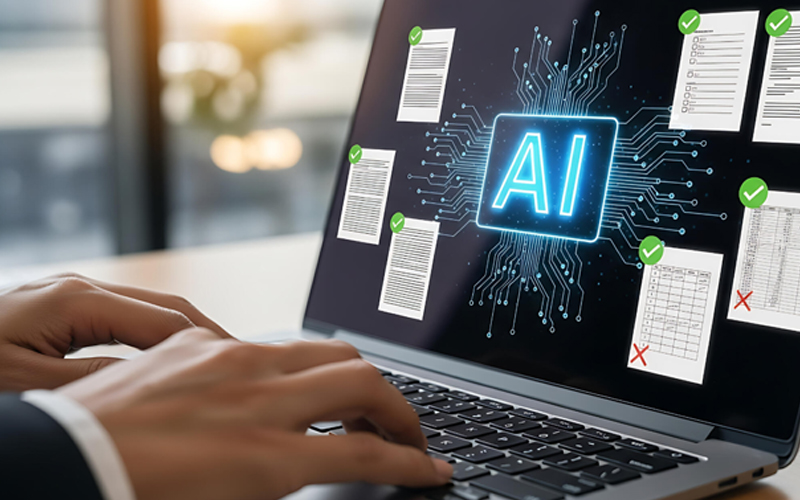
Global enterprises manage complex regulatory obligations across jurisdictions. Intelligent automation simplifies this burden.
- AI maps operational data to regulatory standards.
- Automated documentation improves reporting accuracy.
- Audit trails remain continuously updated.
Through AI in safety management, compliance shifts from periodic activity to continuous assurance.
Connecting ecosystems across safety infrastructure
Disconnected systems limit visibility and delay decisions. Integration, therefore, defines success.
- AI links IoT devices, legacy platforms, and safety applications.
- Unified dashboards centralise insights.
- Executives access enterprise-wide intelligence instantly.
Integrated architectures allow AI for safety to support faster, data-driven leadership action.
Building a proactive safety culture
Technology adoption delivers value only when culture evolves alongside it.
- Predictive insights guide leadership priorities.
- Transparent monitoring improves accountability.
- ESG metrics connect safety performance to sustainability targets.
Such strategic embedding of AI in safety management reinforces prevention-focused organisational behaviour.
Deploying AI in safety management requires strong data architecture, governance frameworks, and domain expertise. Infosys BPM supports enterprises through its comprehensive responsible AI and AI safety solutions suite, enabling organisations to operationalise predictive analytics, automate compliance, and scale intelligent safety capabilities across global environments.
AI for workplace safety management: Implementation best practices
Adopting intelligent safety technologies presents practical hurdles. Many organisations struggle with inconsistent data quality, legacy infrastructure limitations, high implementation costs, and internal resistance to automation-driven change.
Structured execution resolves these barriers and ensures measurable value from AI for safety investments. The following best practices help leaders move from experimentation to scalable adoption:
- Assess current safety maturity: Evaluate existing systems, data quality, and manual bottlenecks across reporting, compliance tracking, and risk analysis.
- Prepare technology foundations: Select scalable platforms with real-time monitoring, predictive analytics, compliance automation, and intuitive dashboards.
- Align workforce and leadership: Train teams to interpret AI insights, reinforce human oversight, and address ethical concerns such as algorithmic bias.
- Launch pilot initiatives first: Test targeted use cases, gather feedback, and refine models before enterprise-wide rollout.
- Scale strategically with measurement: Track incident reduction, compliance gains, and ROI metrics to guide expansion.
- Balance automation with judgement: Treat AI in safety management as decision support, not a replacement for EHS professionals.
Leaders preparing for the future of EHS risk management need to prioritise capability building alongside technology adoption. Upskilling teams in analytics literacy, deploying modular platforms that scale with operational growth, and monitoring emerging regulations governing AI for safety can help enterprises build future-ready EHS strategies. This forward-looking approach ensures investments remain compliant, adaptable, and aligned with evolving enterprise risk landscapes.
Conclusion
Global enterprises now face a safety environment with intense regulatory pressure, growing operational complexity, and rising incident costs. AI in safety management provides a strategic framework that combines predictive analytics, real-time monitoring, automated compliance, and integrated intelligence. By aligning technology, workforce readiness, and governance, organisations can transform safety from a reactive obligation into a measurable performance driver. As adoption accelerates, AI for safety will play a central role in shaping resilient, compliant, and data-led workplaces worldwide.
Frequently asked questions
Traditional EHS software functions as a reactive system of record, whereas AI-driven safety management acts as a predictive intelligence layer. While legacy systems focus on documenting incidents after they occur, AI leverages machine learning and computer vision to identify hazardous patterns and unsafe conditions in real time. This shift enables enterprises to move from compliance-based reporting to proactive risk mitigation and incident prevention.
AI automates the mapping of operational data to diverse jurisdictional standards, ensuring audit trails remain continuously updated. By standardising compliance across fragmented global systems, enterprises reduce the risk of regulatory penalties and improve the accuracy of ESG metrics. This systematic approach transforms safety performance into a measurable performance driver that aligns with corporate sustainability targets.
Scaling requires a modular architecture that connects IoT devices, legacy platforms, and unified dashboards to centralise enterprise-wide intelligence. Enterprises must assess current safety maturity and prepare technology foundations before launching targeted pilot initiatives to validate ROI. For more details on navigating these transitions, explore our comprehensive responsible AI and AI safety solutions.