


Utilities deliver essential services, bill reliably for them, and still lose revenue through gaps that have nothing to do with the service itself. Revenue cycle optimisation for utilities targets exactly this. The lag between service delivery and revenue collection, and every friction point that stretches that gap. For providers managing large residential and commercial portfolios, even a modest reduction in that lag can release significant working capital.
The length of the utility revenue cycle
The revenue cycle in utilities is longer than most finance teams account for. A customer consumes electricity in January, a meter reader logs the consumption in late January, the provider sends an invoice in March, and payment, if it arrives on schedule, lands by the end of March. That is a 45-60-day exposure window before a single pound or dollar clears. And every step may stretch further.
For large utility providers managing millions of accounts, a Days Sales Outstanding (DSO) figure that climbs by even a few days can represent tens of millions in working capital sitting idle. Utility revenue management, at its core, is not just a billing function; it is a capital management function.
Where the revenue cycle breaks down
The causes of delay are mundane, persistent, and compounding. Manual meter readings introduce errors that trigger disputes. Disconnected systems force billing teams to work off data that is already stale by the time anyone reviews it. Customers receive invoices they cannot interpret, and instead of paying, they call, and every call costs money to handle.
The cycle does not break at one point; it frays across all of them. Revenue cycle optimisation for utilities means closing every one of these gaps systematically, not just the obvious ones.
The billing process as a cash flow lever

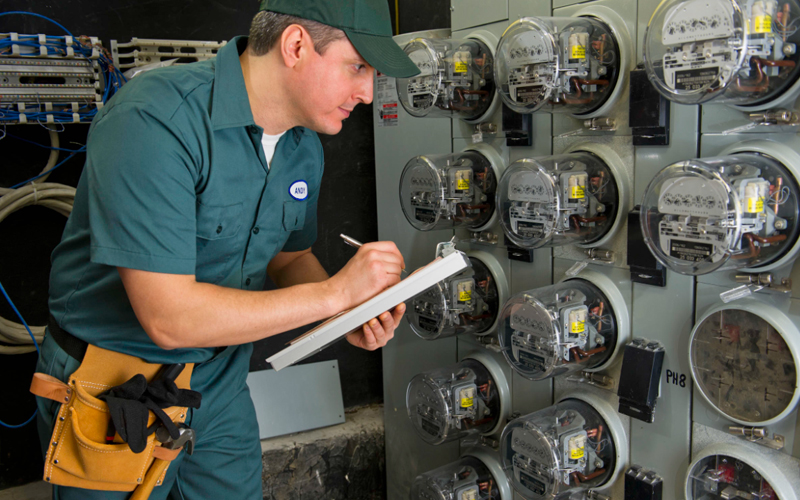
Utility providers that audit their billing process first tend to uncover the most, and with good reason. Inaccurate metering data sits at the root of a disproportionate share of billing disputes. Automated Meter Infrastructure (AMI) and smart meter technology have materially changed this since 2023, enabling near-real-time consumption data that reduces estimation errors across large account bases.
But smart meters are no guarantee of accuracy on their own. Implementation quality, network reliability, and data governance matter just as much. If a billing platform cannot handle variable tariff structures, multi-premise accounts, or time-of-use pricing cleanly, errors simply migrate downstream rather than disappear.
What optimisation actually looks like
Revenue cycle optimisation is as much about customer behaviour as an internal process. A bill that confuses the reader is a bill that delays payment. Simplifying invoice formats — removing unnecessary line items, adding plain-language usage summaries, and offering digital-first delivery — brings days sales outstanding down measurably. And yet, many utility providers still treat paper billing as their primary channel. That gap between what customers expect and what providers deliver carries a direct, quantifiable cost.
On the collections side, structured escalation matters enormously. A well-designed payment follow-up cadence that typically involves a reminder at day seven, an escalation at day fourteen, and a formal notice at day thirty does not require a large collections team. It requires a system that tracks account status in real time and triggers the right action automatically. DSO drops not because customers become more diligent, but because the utility stops giving them room to delay.
Revenue leakage
Utility revenue management also has to reckon with revenue leakage, a problem that rarely makes it onto the executive agenda until the damage is already done. Unbilled consumption, incorrect tariff assignments, and unresolved credit balances quietly erode the revenue base over time, and most of it surfaces only during year-end audits, by which point recovery becomes significantly harder.
Revenue cycle optimisation for utilities embeds those audit loops directly into the billing cycle, so teams catch leakage early. The utility billing process, when designed with embedded validation checks, stops the drain before it compounds.
The business case
The benefits of getting this right compound over time. Lower DSO means higher working capital and less reliance on short-term credit facilities. Fewer disputes mean lower operational costs. Customers who receive accurate, timely, and easy-to-understand bills churn less. There is also a regulatory dimension: utilities across major markets face compliance obligations around billing accuracy and dispute resolution timelines, and a robust revenue cycle optimisation programme reduces exposure on both fronts.
Industry analysts project the global revenue management market to grow from $19.9 billion in 2022 to $69.2 billion by 2032. Revenue cycle optimisation for utilities sits at the heart of how utilities compete on financial performance.
How can Infosys BPM help with utility revenue management?
For electricity distribution utilities, the Meter-to-Cash (M2C) cycle lays the foundation of financial health and customer trust. Many utilities still struggle with revenue leakage caused by data silos and manual billing errors that creep into the value chain.
Infosys BPM bridges these gaps by transforming traditional M2C operations into an intelligent, resilient, and efficient digital-first ecosystem.
Explore our meter-to-cash solutions that improve utility revenue cycle management.
Frequently asked questions
Revenue cycle optimisation is a strategic capital management function, whereas billing is a discrete operational task. While billing focuses on invoice generation, optimisation integrates meter data validation, automated exception handling, and predictive collection analytics. This end-to-end approach reduces Days Sales Outstanding (DSO) and releases significant dormant working capital.
Data integrity gaps between Advanced Metering Infrastructure (AMI) and legacy ERP systems represent the highest governance risk. Inconsistent data synchronisation leads to unbilled consumption and regulatory non-compliance with regional billing accuracy standards. Implementing automated validation loops ensures audit-ready financial reporting and mitigates the risk of systemic revenue leakage across large portfolios.
Enterprises typically observe a 15–25% reduction in DSO and a significant decrease in cost-to-serve through digital transformation. By replacing paper-based billing and manual collections with automated, multi-channel escalations, utilities lower their reliance on short-term credit facilities. These efficiencies result in improved liquidity and a scalable cost structure for complex account bases.
Robust governance frameworks utilise exception-based processing to isolate complex tariff anomalies for manual executive review. Automated systems are configured with threshold-based triggers to prevent the dispatch of erroneous invoices that trigger mass disputes. This targeted intervention protects the brand and reduces operational overhead associated with dispute resolution by up to 30%.
Optimisation directly increases liquidity by shortening the exposure window between service delivery and cash realisation. Reducing a standard 60-day cycle by even five days releases substantial capital for providers managing millions of accounts. This enhanced cash flow facilitates infrastructure reinvestment and reduces the financial burden of bad debt provisions and collections.