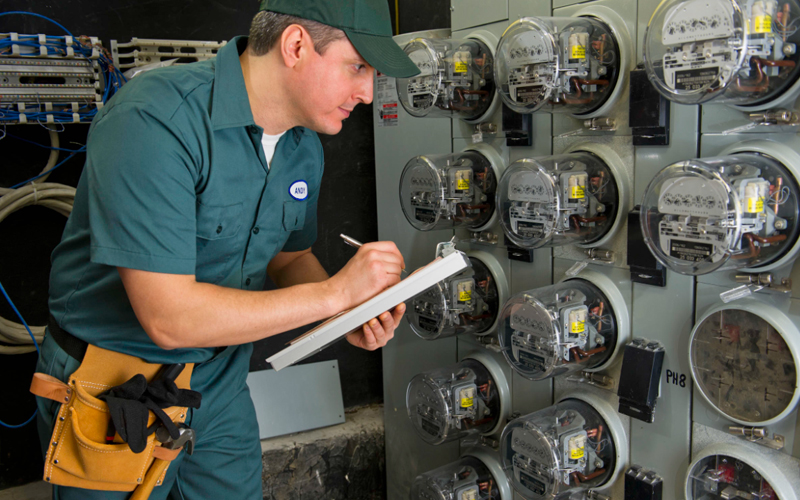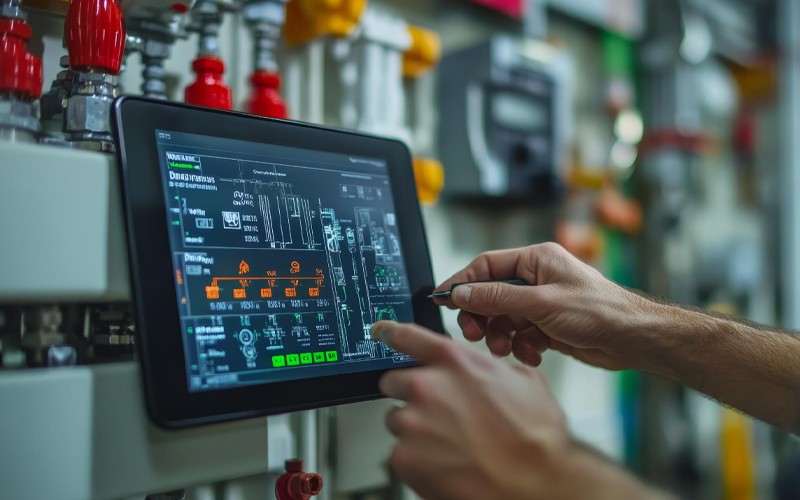



For decades, utility billing worked on a simple, albeit flawed premise: send customers an estimated number and hope they do not question it. A meter reader would visit monthly (sometimes even less), record a reading, and a bill would follow. Smart meter billing solutions have replaced that guesswork with real-time data, and the consequences for how customers experience their utility provider have been significant.
The global smart meter market sat at $26.65 billion in 2024, growing at a CAGR of 9.9%. And by 2029, 94% of all electricity meters in North America are projected to be smart. Deployment is not a future consideration — it is already reshaping how utilities operate and how customers engage with them.
Why manual billing was always the weak link
Manual billing was not just slow. It was structurally unreliable. Utilities managing large customer bases had to manually upload usage data, calculate consumption figures, and generate invoices. This process invited errors at every stage. Customers received bills they could not verify and disputed charges they had no data to challenge.
There was another, less visible problem. Analogue meters degrade with age and systematically under-measure consumption. Utilities were routinely under-billing customers due to infrastructure failure. Advanced metering infrastructure addresses this directly. Smart meters capture usage in real time and feed it into billing platforms via API, removing human handling from the data chain entirely. Billing accuracy reaches 95–98% with smart metering. Usage-based billing becomes the default, and customers pay for actual consumption, not estimates.
What changes for the customer
Take a household that previously received a single monthly figure with no breakdown. With smart meter billing solutions, that same household can log into a self-service portal, review hourly consumption data, receive alerts when usage spikes above a threshold, and see a projected bill before the billing cycle closes. Smart home integration extends this further, too. Meters communicate with thermostats and appliances to reduce consumption automatically during peak-demand windows.
Demand response programmes depend on exactly this kind of visibility. Utilities can offer lower tariffs during off-peak hours, but customers can only act on that incentive if they can see their usage in real time. Without smart meter billing solutions, demand response remains an offer that most customers cannot practically accept. With advanced metering infrastructure in place, it becomes a genuine tool for managing household costs.
Outage experience also improves measurably. Automated fault detection through advanced metering infrastructure has significantly reduced outage durations in some utility regions, because grid operators receive alerts before service disruptions escalate. Customers notice fewer prolonged outages, and when outages do occur, restoration is faster.
The operational case for utilities
The gains are not one-sided. Utilities that deploy smart meter billing solutions cut operational costs by 15–30%, primarily by eliminating manual meter reading and reducing customer service volume. Revenue recovery improves as smart meters eliminate the systematic under-measurement that ageing analogue infrastructure caused, meaning utilities bill for what customers actually consume and not an estimate that routinely fell short.
Usage-based billing also enables new commercial models. Prepaid plans, time-of-use tariffs, and consumption-tiered packages give customers real choices rather than a single standardised charge. Billing platforms built for advanced metering infrastructure, particularly API-driven and automated systems, scale from hundreds to hundreds of thousands of meters without degrading performance or accuracy. Demand response, dynamic pricing, and renewable energy tracking all become operationally viable once the billing infrastructure is in place.
Integration complexity is real

Connecting smart meters to legacy billing systems is not straightforward. The data volumes are large. Cybersecurity and data privacy require serious investment, given that consumption data carries enough granularity to reveal household behaviour patterns.
But utilities companies that work through this integration consistently report that the returns justify the cost. And as AI-driven anomaly detection and blockchain-based transaction recording become standard features of smart meter billing solutions, the infrastructure becomes more resilient over time.
Infosys BPM supports utility providers in integrating smart metering infrastructure with modern billing, analytics, and customer engagement platforms. Explore our meter-to-cash solutions to learn how we enable this transition.
From billing disputes to billing transparency
Billing has historically been the most contentious touchpoint in the utility-customer relationship. Estimated readings, unexplained charges, and limited recourse for disputes accumulated into a chronic trust deficit. Smart meter billing solutions change this by giving customers direct access to the data behind every invoice.
When a customer can verify every line of a bill against their own usage history, disputes drop, trust builds, and the relationship between utility and consumer changes in character. That is a more durable improvement than any customer satisfaction campaign.
Frequently asked questions
Smart meter billing solutions reduce operational expenditure by 15–30% by eliminating manual meter reading and lowering customer service volumes. Crucially, they mitigate revenue leakage by correcting the systematic under-measurement common in aging analog infrastructure, ensuring billing accuracy reaches 95–98% based on actual consumption rather than estimates.
The primary risks involve managing high-velocity data volumes and ensuring robust cybersecurity for granular consumption data. Successful implementation requires API-driven architectures that bridge smart meters with legacy platforms, utilizing AI-driven anomaly detection to maintain data integrity and protect consumer privacy across the meter-to-cash (M2C) ecosystem.
Usage-based billing eliminates the "trust deficit" by providing customers with verifiable, hourly consumption data and real-time spike alerts via self-service portals. By shifting from estimated billing to data-driven transparency, utilities proactively reduce the volume of billing disputes and foster a more consultative, durable relationship with their consumer base.
Smart billing solutions provide the granular visibility necessary to execute time-of-use (ToU) tariffs and demand response programmes effectively. By integrating with smart home infrastructure, these solutions enable utilities to offer lower off-peak tariffs, allowing customers to automate consumption adjustments that reduce costs while simultaneously enhancing grid stability during peak periods.
Advanced metering infrastructure (AMI) improves grid resilience through automated fault detection, alerting operators to disruptions before they escalate into widespread outages. This proactive capability reduces restoration times and field service costs, allowing utilities to optimize resource deployment while improving key reliability metrics for both commercial and residential stakeholders.