





stop revenue leakage before it happens
Book a demoAgentic AI-driven telecom fraud management and revenue assurance
In today’s hyper-connected telecom ecosystem, revenue leakage and fraud are no longer isolated issues—they are systemic risks. The expansion of digital channels, increasingly complex partner networks, real-time charging models, and heightened customer expectations have significantly amplified these threats. Even a one percent revenue leakage can result in tens of millions of dollars in annual losses for global operators.
To address these challenges with confidence, Infosys Tele FraudGuard empowers telecom operators with proactive, AI-driven capabilities that safeguard revenue integrity while strengthening customer trust. It unifies revenue assurance and fraud management (RAFM) in a single framework, pairing telecom fraud detection with end-to-end revenue assurance controls.

Key stats
$10 Mn Saved for a large Australian telco
90% Fraud coverage across value chain
75% Reduction in time to detect and act

Infosys Tele FraudGuard framework
Infosys Tele FraudGuard framework is a classic blend of:
- Agentic AI for autonomous operations, learning, and preventive controls
- Generative AI for faster investigation, summarization, and root-cause analysis
- Advanced analytics & machine learning for anomaly detection
- Managed Services with deep telecom expertise and combined industry intelligence
This helps you transform your telecom resilience with a unified, AI‑powered and insight‑driven vision for next‑generation fraud and revenue assurance.
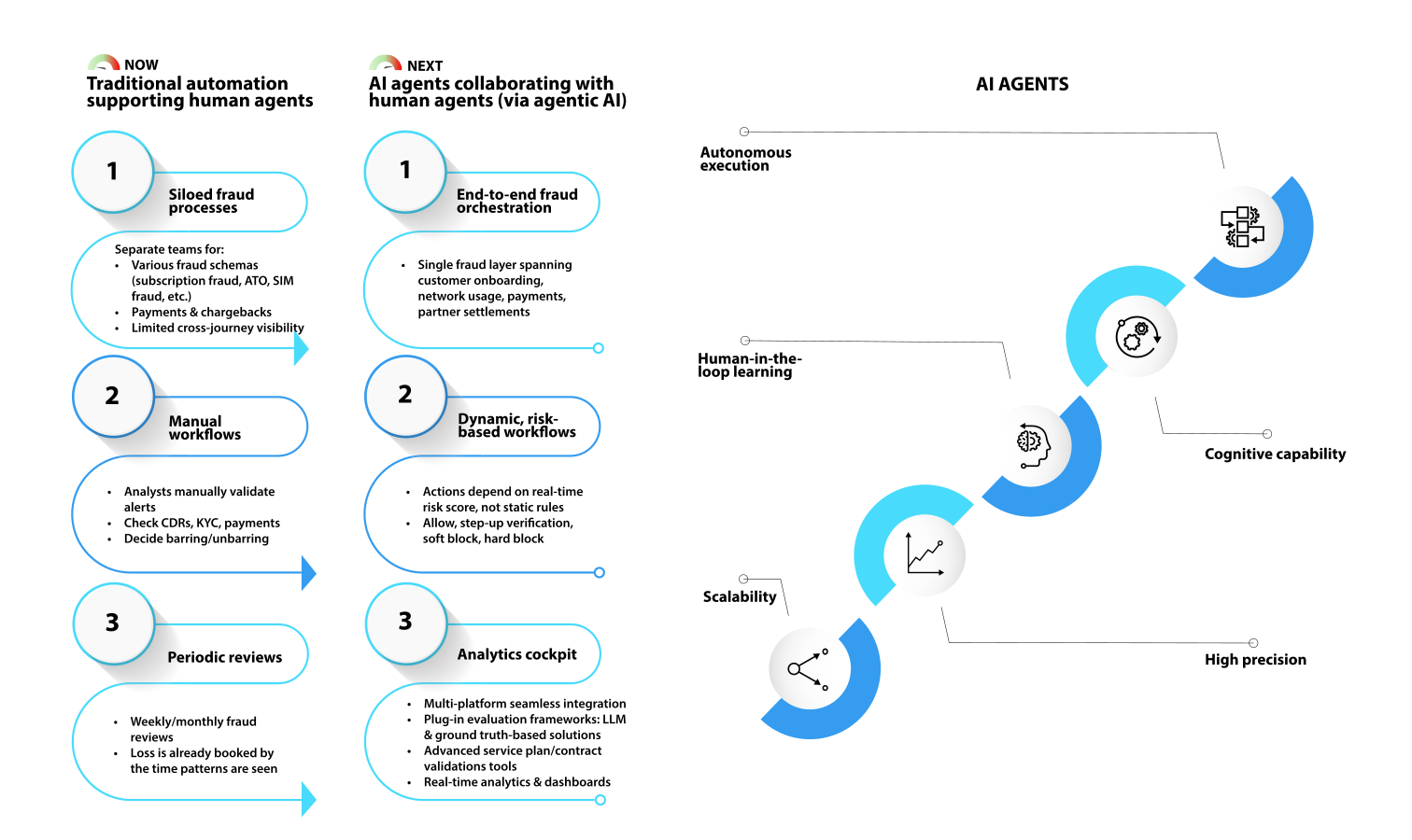
Fraud management across the telecom value chain
Tele FraudGuard empowers telcos to safeguard their revenue and mitigate fraud across a wide range of telecom segments:

Communication service providers (B2B/B2C)

Broadband and fixed-line services

MVNOs

Digital services & content providers

Roaming & wholesale providers
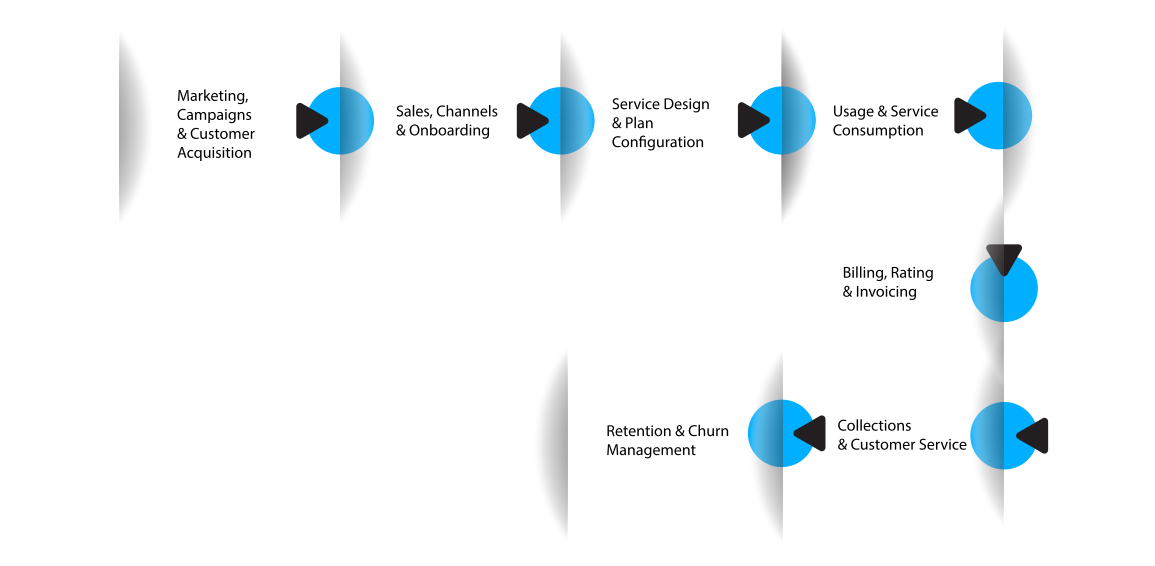
We are securing every revenue moment across the telecom lifecycle— from customer acquisition to retention. For roaming and wholesale providers, this includes anomaly detection for wholesale telecom fraud across interconnect and partner traffic.
Our services
| Revenue assurance | Fraud management | Telecom analytics for fraud management and AI | Process consulting |
|
|
|
|
| Shift from “post-facto controls” to “preventive, design-time assurance” | Focus on fraud-as-a-system, not isolated fraud types | Move from dashboard-based decisions, to autonomous actions | From “managed services” to “managed outcomes” |
Telecom fraud types we detect and prevent
Our telecom fraud detection capabilities span the full threat spectrum of a modern fraud management system in the telecom industry:
- International Revenue Share Fraud (IRSF)
- Wangiri (one-ring scams)
- SIM box and interconnect bypass fraud
- PBX hacking
- Account takeovers and identity fraud
- Subscription and promotion abuse
- Payments, wallet, and refund fraud
- Dealer, agent, and commission fraud
- IoT and enterprise fraud
Solution architecture
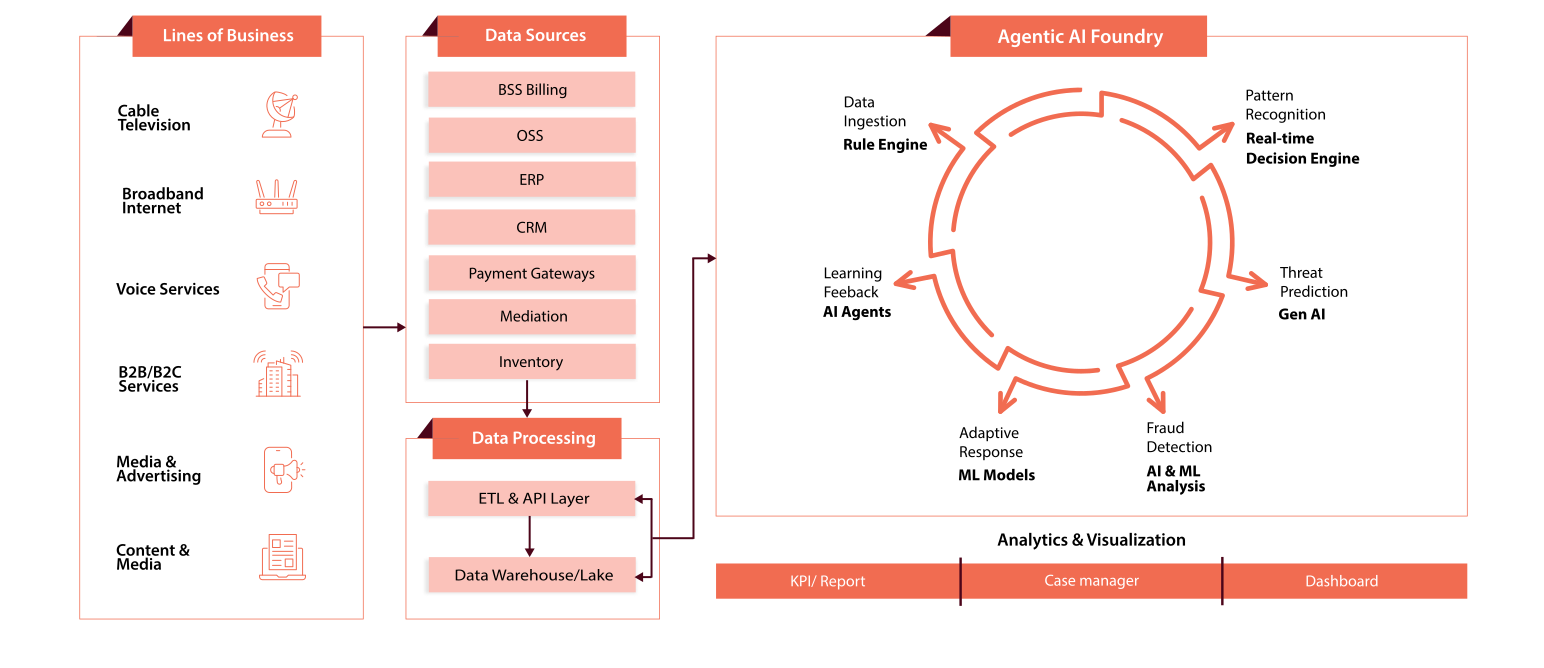
Take control of revenue risks—deploy Infosys Tele FraudGuard today

Proven business outcomes
Resource center



Challenges and solutions for telecom fraud management
A fraud management system in telecom is an end-to-end security framework designed to detect, investigate, and prevent malicious activities across a telecommunications network. Modern platforms continuously analyze call detail records (CDRs), network signaling, and subscriber behaviors in real time to stop revenue leakage and protect customer data before financial damage occurs.
An advanced telecom fraud management solution provides 360-degree protection against a wide spectrum of threats. This includes International Revenue Share Fraud (IRSF), Wangiri (one-ring scams), SIM box/interconnect bypass fraud, PBX hacking, account takeovers, and subscription fraud. By monitoring the entire customer lifecycle, operators can secure every revenue moment from acquisition to retention.
Legacy fraud systems rely on static, backward-looking rules that struggle to catch new threat patterns and often generate high volumes of false positives. By leveraging agentic AI in telecommunication, modern systems establish behavioral baselines and use machine learning to detect zero-day anomalies. This allows the system to autonomously flag and block suspicious activities such as a sudden spike in high-cost international calls at 3 AM shifting the defense strategy from reactive to predictive.
Because telecom attacks are highly automated, financial damage can escalate within minutes. Infosys Tele FraudGuard utilizes autonomous AI agents to correlate data across siloed systems and execute automated responses in milliseconds. This drastically shrinks the window of exposure, resulting in a 75% reduction in the time required to detect and act upon emerging threats.
Revenue assurance and fraud management (RAFM) combines two disciplines: revenue assurance ensures billing, rating, and usage integrity across lead-to-cash and order-to-cash, while fraud management detects and prevents malicious threats. Infosys Tele FraudGuard unifies both in a single RAFM control tower, using telecom analytics for fraud management and consumer protection alike, so leakages and fraud are managed as one system rather than in silos.
Request for services
Find out more about how we can help your organization navigate its next. Let us know your areas of interest so that we can serve you better.

All the fields marked with * are required

